
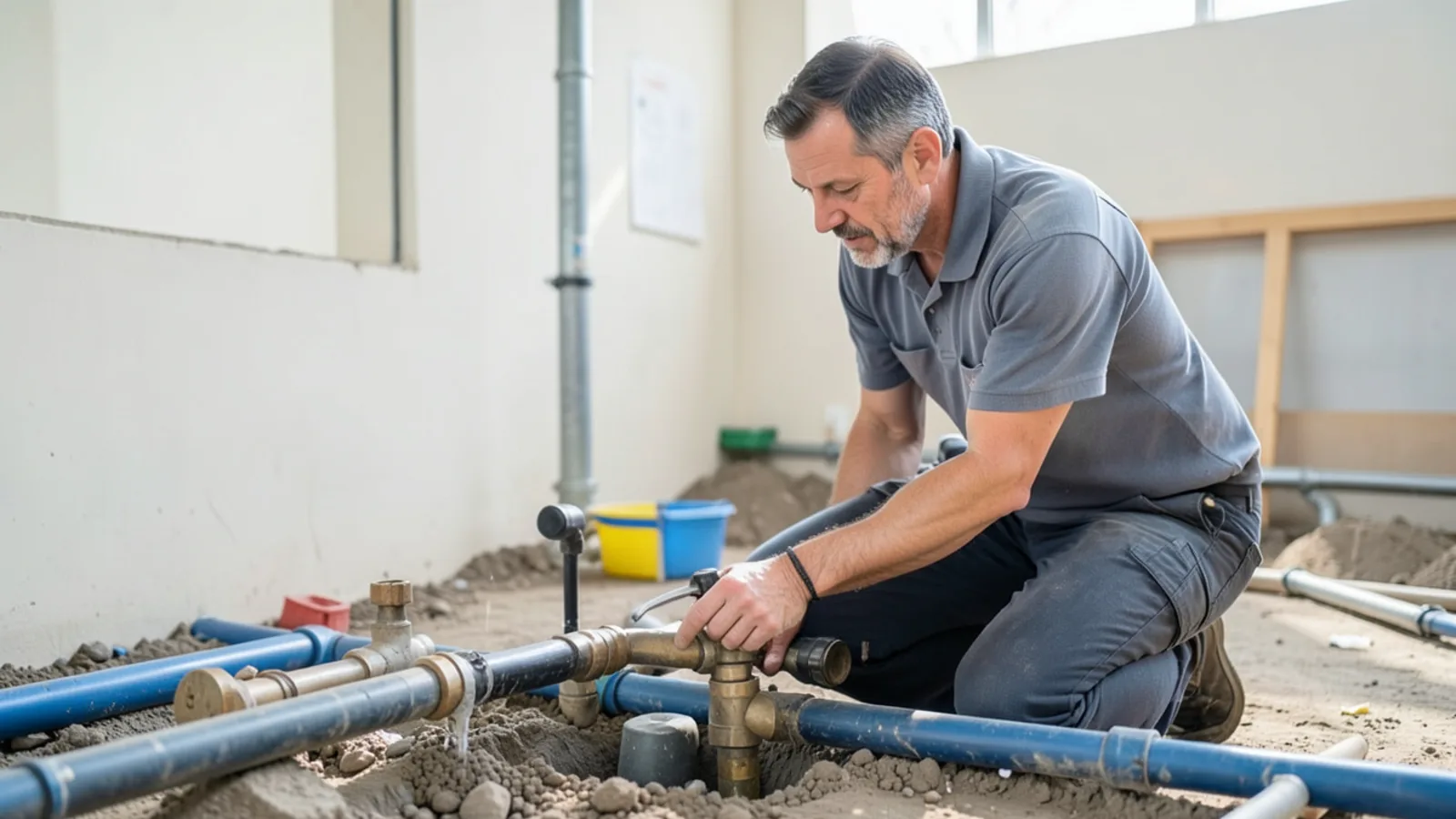
Why water line ownership boundaries matter for Corona homeowners
When water starts bubbling up through a front lawn, saturating the parkway grass, or seeping out from beneath a sidewalk curb in Corona, property owners are immediately confronted with an urgent financial question: who is legally and financially responsible for paying for the excavation and repair?
In Western Riverside County, underground utility lines follow strict legal demarcation boundaries established by municipal municipal codes and local water district tariffs. The division of responsibility between the City of Corona Department of Water and Power (DWP) or the Eastern Municipal Water District (EMWD) and a private property owner is clean and unambiguous. However, because water pipes are buried four to six feet beneath lawns, driveways, and sidewalks, determining whether a leak sits on the municipal side or the private side requires precise physical diagnostic steps.
Failing to understand these legal boundaries can lead to costly mistakes. If a homeowner calls a private plumbing contractor to dig up a leak that is actually located on the city side of the water meter, the municipal utility will not reimburse the private contractor invoice. Conversely, if a homeowner waits days for municipal utility crews to investigate a leak located on private piping, tens of thousands of gallons of potable water will be wasted, potentially undermining concrete driveway foundations, eroding soil, and generating a massive excess consumption water bill. Knowing the exact division of responsibility protects your property, your budget, and your legal rights.
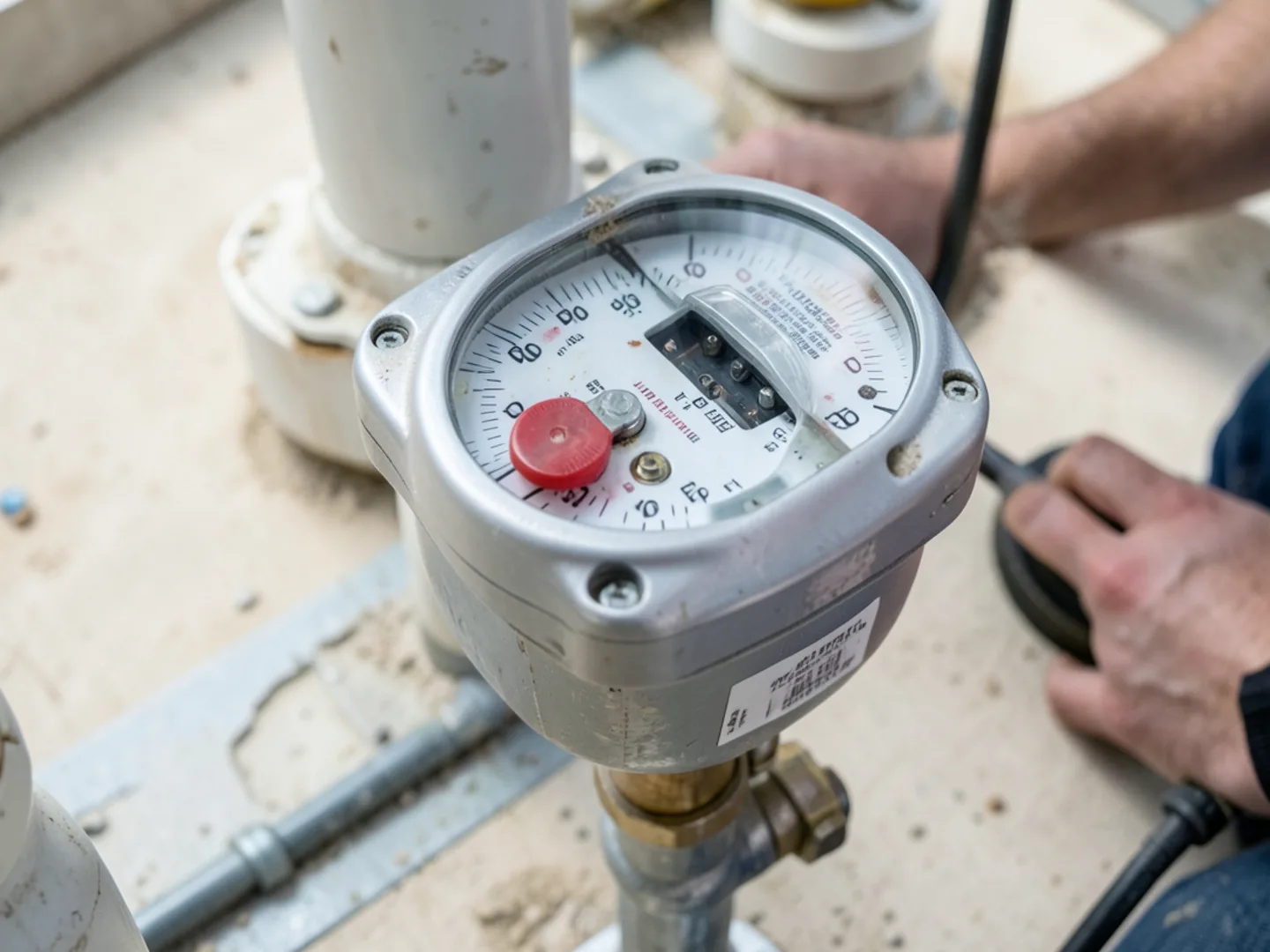
The legal boundary for potable water supply at the municipal meter
For fresh drinking water supply, the universal point of demarcation between public and private infrastructure is the municipal water meter, typically housed in a concrete or polymer box set into the sidewalk, parkway, or front lawn near the street curb.
• The Municipal Side (City Utility Responsibility): The City of Corona DWP owns, maintains, and repairs the high-pressure water distribution main running beneath the street asphalt, the corporation stop tap, the service lateral connecting the main to the meter box, the street-side angle stop shutoff valve, and the physical water meter register itself. If an underground pipe ruptures between the street main and the inlet coupling of the water meter, the city utility is completely responsible for excavating the street or parkway, fixing the pipe, and restoring the surface.
• The Private Side (Property Owner Responsibility): The private property owner ownership begins immediately at the outlet coupling on the customer discharge side of the water meter. Everything downstream from that point belongs exclusively to the homeowner. This includes the customer-side shutoff valve, the private underground yard service line traversing the front property to the house foundation, the exterior pressure reducing valve (PRV), the main house shutoff riser, and all interior distribution piping.
If the underground yard line cracks due to shifting soils, tree root displacement, or age-related corrosion, the property owner must arrange and pay for the excavation, pipe replacement, and landscape repair. Corona municipal water meters are equipped with mechanical backflow check assemblies or direct coupling threads; tampering with the meter or connecting unmetered bypass lines carries severe municipal penalties under Corona Municipal Code.
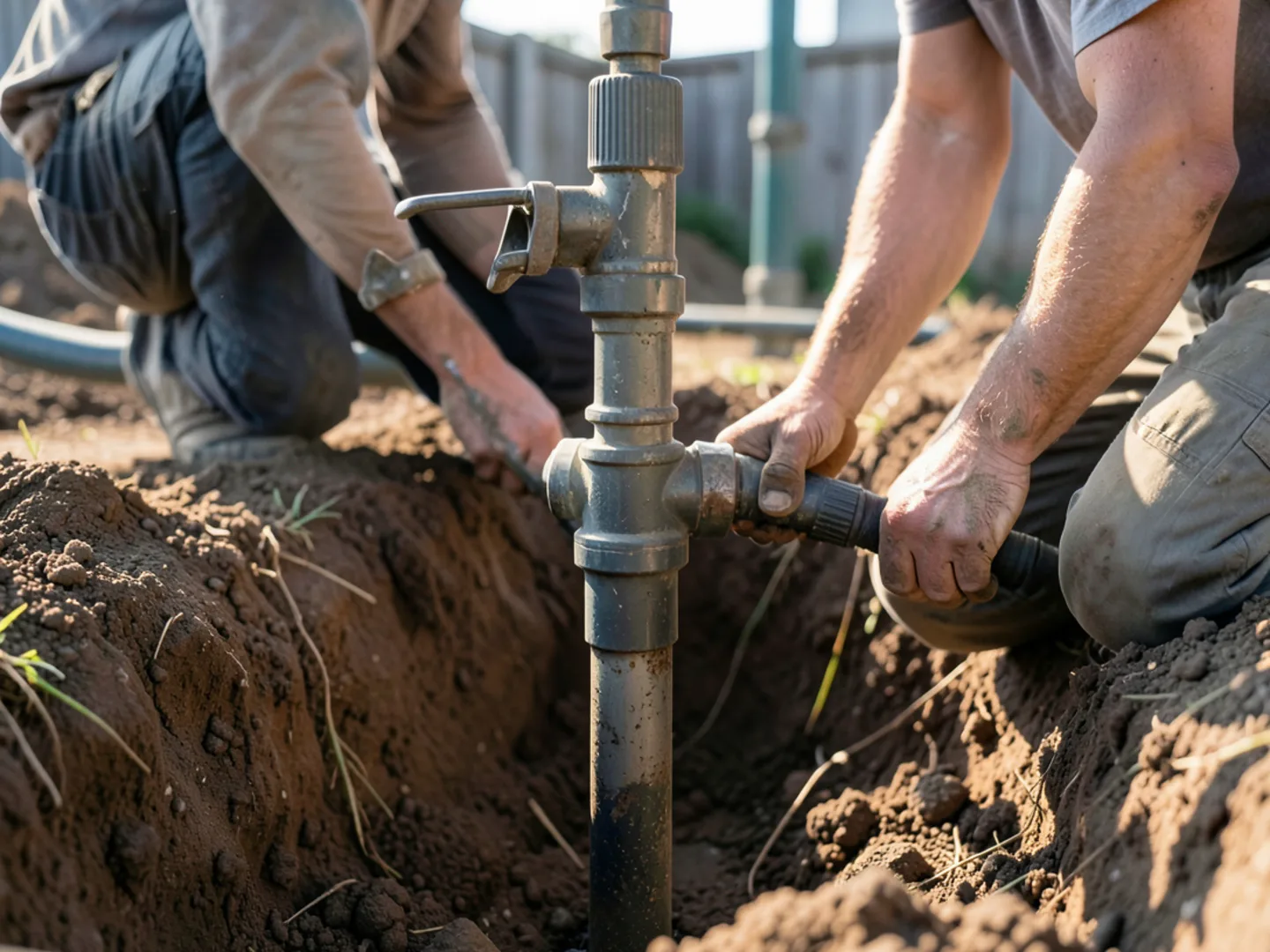
Sewer lateral boundaries from foundation to the municipal street main
While potable water responsibility stops at the curb meter box, sanitary sewer lateral rules in California are dramatically different and significantly more burdensome for property owners.
In Corona, Norco, Eastvale, and across Riverside County, property owners are legally and financially responsible for the entire private sewer lateral line from the exterior foundation of the building all the way to the municipal sewer main connection in the middle of the public street. This includes the portion of the pipe running beneath private lawns, the public sidewalk, the parkway strip, and the public asphalt roadway.
This continuous responsibility surprises many homeowners. If mature ficus or pepper tree roots planted in the city parkway infiltrate vitrified clay sewer pipe joints beneath the street pavement, causing a complete sewage backup, the City of Corona does not pay for the repair. The property owner must hire a licensed C-36 plumbing contractor to clear the line, perform video camera inspections, and conduct repairs. If the street must be excavated to replace a collapsed connection saddle, the homeowner must obtain city encroachment permits, provide traffic control, and pay for hot-mix asphalt restoration, which can drive total repair costs from $5,000 to over $15,000. Modern trenchless pipe lining technologies frequently allow homeowners to rehabilitate these damaged pipes beneath streets without digging up the roadway.
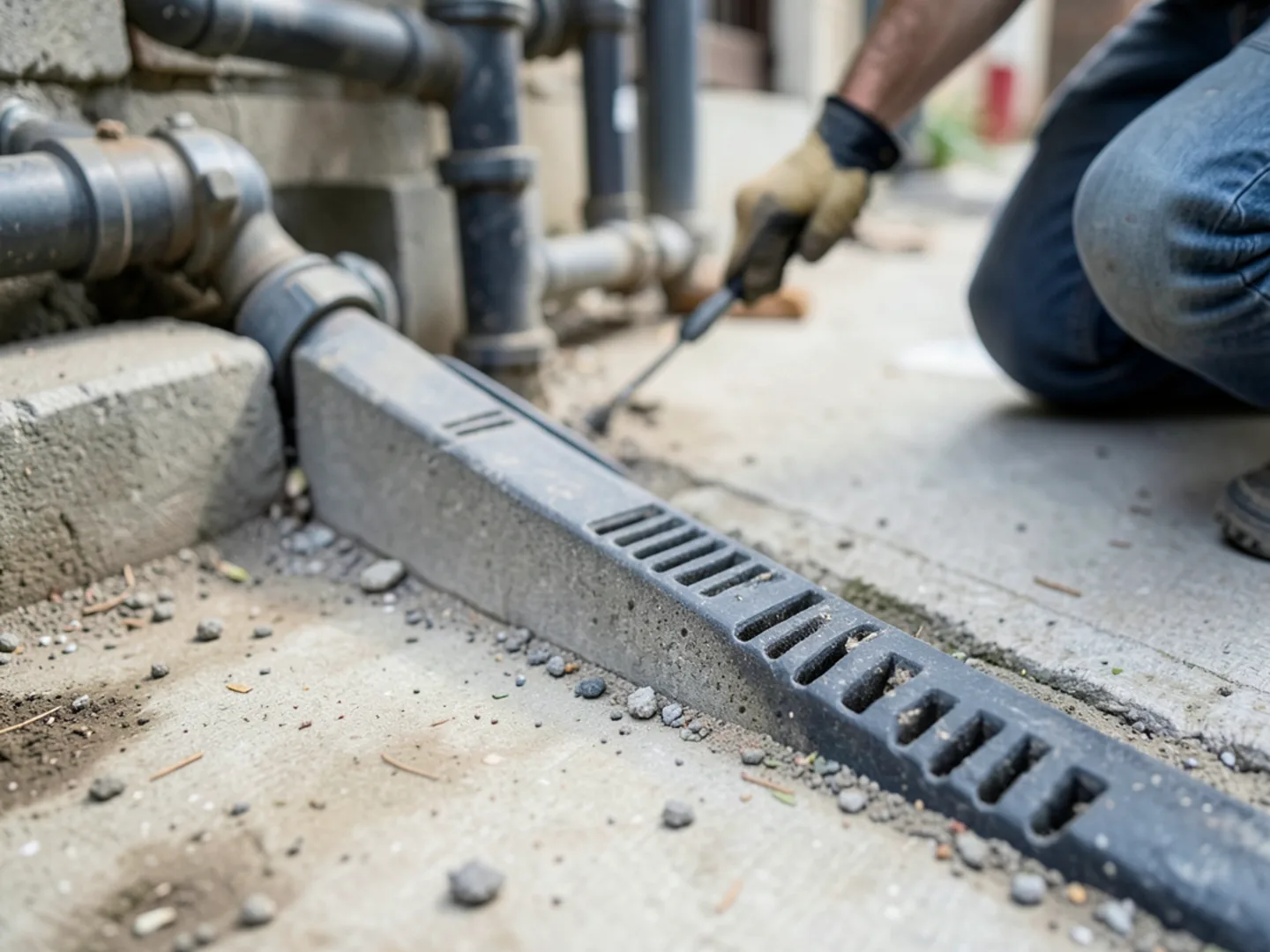
Step-by-step method to identify if a leak is on the city or homeowner side
Before hiring a contractor or filing a municipal utility complaint, homeowners can perform this six-step diagnostic protocol to determine whether an underground leak is on the city or private side of the meter:
1. Locate and Open the Meter Box: Find the concrete or composite water meter box near the curb. Carefully pry open the lid using a large flathead screwdriver or meter hook, watching for spiders or insects. 2. Inspect the Meter Pit for Standing Water: Observe whether the box is flooded. If water is spraying or pooling around the street-side angle valve before the meter body, the leak is on the municipal side. 3. Observe the Low-Flow Leak Indicator: Modern Corona water meters feature a small rotating red triangle, blue star, or digital LCD display icon. If this indicator is spinning or incrementing while no water is running inside the home, pressurized water is actively flowing through the meter into the private yard line. 4. Perform the House Main Shutoff Test: Turn off the main water shutoff valve located at your house foundation riser. Check the water meter again. If the meter indicator continues to spin while the house is isolated, the leak is located on your private underground service line between the meter and the house foundation. 5. Verify Absence of Flow: If the indicator stops spinning entirely when the house valve is closed, the leak is located inside the house plumbing fixtures (such as a silent toilet flapper leak or slab leak beneath the floor). 6. Contact the Appropriate Entity: If the leak is before the meter or on the meter body itself, immediately call City of Corona DWP dispatch at their emergency water line. If the leak is after the meter on your private service line, contact our team at (207) 419-2600 to dispatch a licensed leak detection technician.
Private compared to municipal plumbing infrastructure responsibility
Understanding who pays for specific plumbing components across your property is simplified by this quick reference guide:
• Municipal Street Water Main: Owned and maintained by the City of Corona DWP. Ruptures and leaks repaired at zero direct cost to property owners. • Service Lateral to Meter: Maintained by the municipal water utility. City pays for all excavation and street repairs up to the meter. • Water Meter Body and Register: Owned and maintained by the city utility. If the meter casing cracks or leaks, the city replaces it without charge. • Customer Meter Coupling and Private Yard Pipe: 100 percent private property owner responsibility. Homeowner pays for excavation, pipe replacement, and re-landscaping. • Pressure Reducing Valve (PRV) and House Riser: Private property owner responsibility. Homeowner pays for mechanical replacement and testing. • Exterior Cleanout to Public Main Sewer Lateral: Private property owner responsibility in Corona. Homeowner pays for snaking, hydro-jetting, trenchless lining, and any street encroachment permits. • Municipal Sewer Main: Owned and maintained by the City of Corona. City pays for repairs and clearings within the municipal collector line.
Municipal street excavation permits and Corona encroachment regulations
When a damaged private water service line or sewer lateral requires excavation extending past the private property line into the public sidewalk, parkway, or street roadway, the repair enters the jurisdiction of the City of Corona Public Works Department.
Private contractors cannot simply dig up a public street or sidewalk. The property owner or their licensed C-36 plumbing contractor must obtain an official Public Works Encroachment Permit prior to breaking ground. This process requires submitting engineered traffic control plans compliant with the California Manual on Uniform Traffic Control Devices (CAMUTCD), posting surety performance bonds, and maintaining comprehensive general liability insurance certificates naming the City of Corona as an additional insured.
Furthermore, the City of Corona enforces strict street cut restoration standards. Excavated utility trenches within the street must be backfilled with high-density two-sack cement sand slurry to prevent road subsidence, rather than native dirt. The contractor must then grind and repave the street asphalt to match the existing roadway profile. On newly paved streets subject to municipal pavement cut moratoriums, contractors may be required to pave an entire lane width or use trenchless directional drilling and pipe bursting to avoid surface cuts entirely.
Homeowner insurance service line riders and DWP leak adjustment credits
Repairing an underground yard water line or street sewer lateral can range from $2,500 for a straightforward yard line repipe to over $12,000 for deep street excavations. Fortunately, two financial safety nets can significantly offset these costs:
• Homeowner Insurance Service Line Endorsement: Standard HO-3 and HO-5 homeowners insurance policies specifically exclude underground utility lines that fail due to wear and tear, rust, root intrusion, or soil shifting. However, most insurance carriers in California offer an optional "Service Line Coverage" or "Buried Utility Line" endorsement that can be added to your existing policy for approximately $30 to $60 per year. This rider typically provides $10,000 in coverage per occurrence with a manageable $500 deductible, covering excavation, pipe replacement, and repairing damaged driveways and landscaping.
• City of Corona DWP Leak Adjustment Program: An underground water leak running continuously for weeks can cause your municipal water bill to spike by hundreds of dollars. The City of Corona Department of Water and Power offers an administrative leak adjustment program for residential customers. To qualify, the homeowner must have the leak repaired by a licensed plumbing contractor within 30 days of discovery and submit the itemized contractor invoice showing the date and exact nature of the underground repair. The utility recalculates your billing based on historical average consumption, crediting a substantial portion of the high-tier excess water charges back to your utility account.
Need professional diagnostics or repairs in Corona?
Our technicians are stationed at 685 E Grand Blvd in Corona. Learn more about our complete plumber in Corona CA capabilities, or call our direct phone line at (207) 419-2600.