
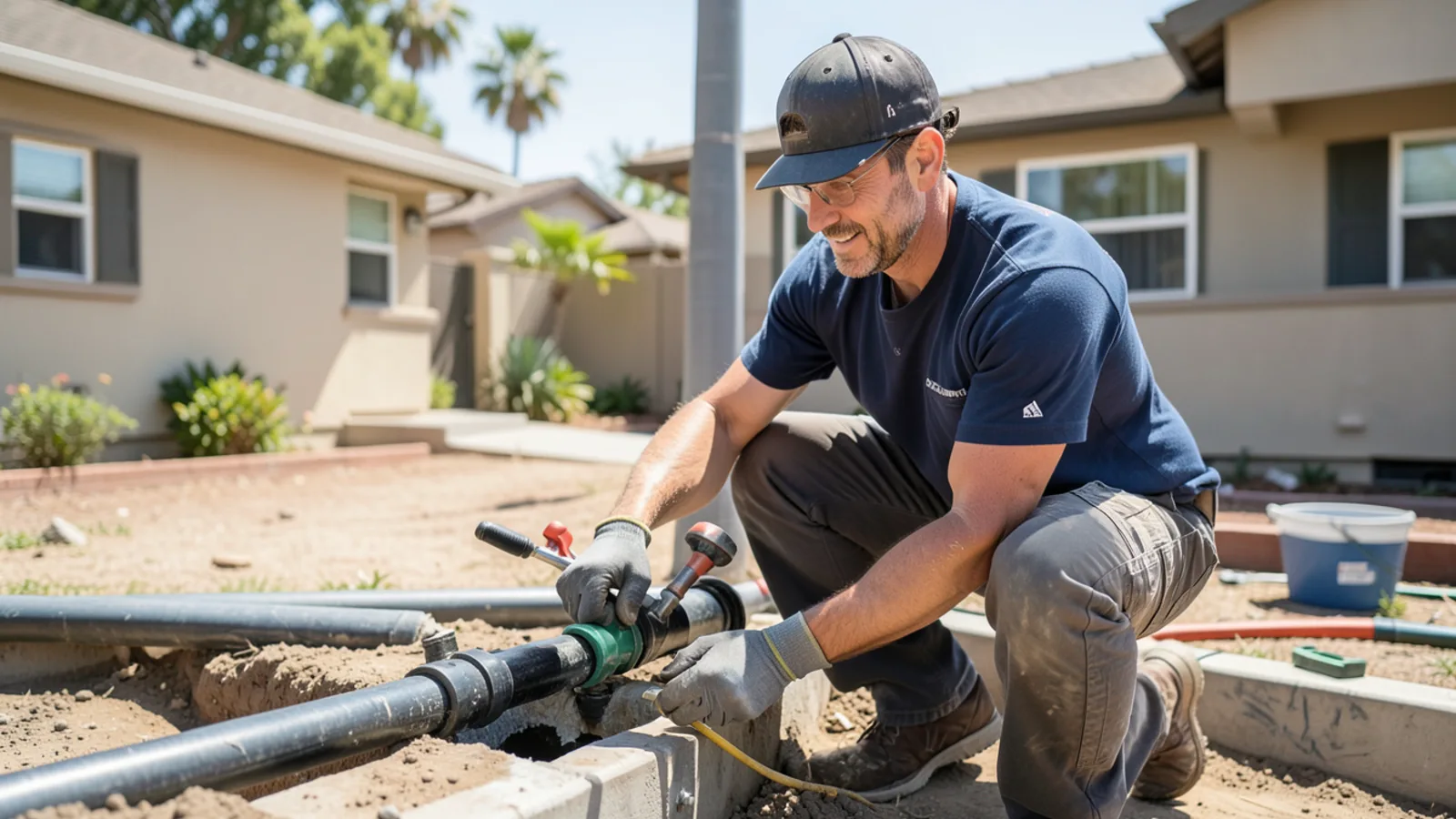
What our main water line repair service includes
When an underground main service pipe fails, our licensed technicians deliver an end-to-end diagnostic and mechanical replacement process. We isolate the municipal supply, deploy electronic acoustic ground microphones to verify the rupture point, and determine whether a localized mechanical sleeve repair or a full trenchless pipe replacement is the most cost-effective solution for your property. Every project includes: (1) Pre-excavation utility markout coordination through DigAlert 811; (2) Precision excavation of compact access pits to protect surrounding landscape, sod, and concrete; (3) Installation of heavy-duty continuous Type K copper tubing or high-density polyethylene (HDPE PE4710) water pipe; (4) Brass compression fittings and full-port brass isolation shutoff valves; (5) Mandatory hydrostatic pressure testing at 150 PSI to verify zero leakage; (6) Complete City of Corona Building Division permit filing through eTRAKiT, rough-in inspection signoff, and clean soil backfill with mechanical compaction.
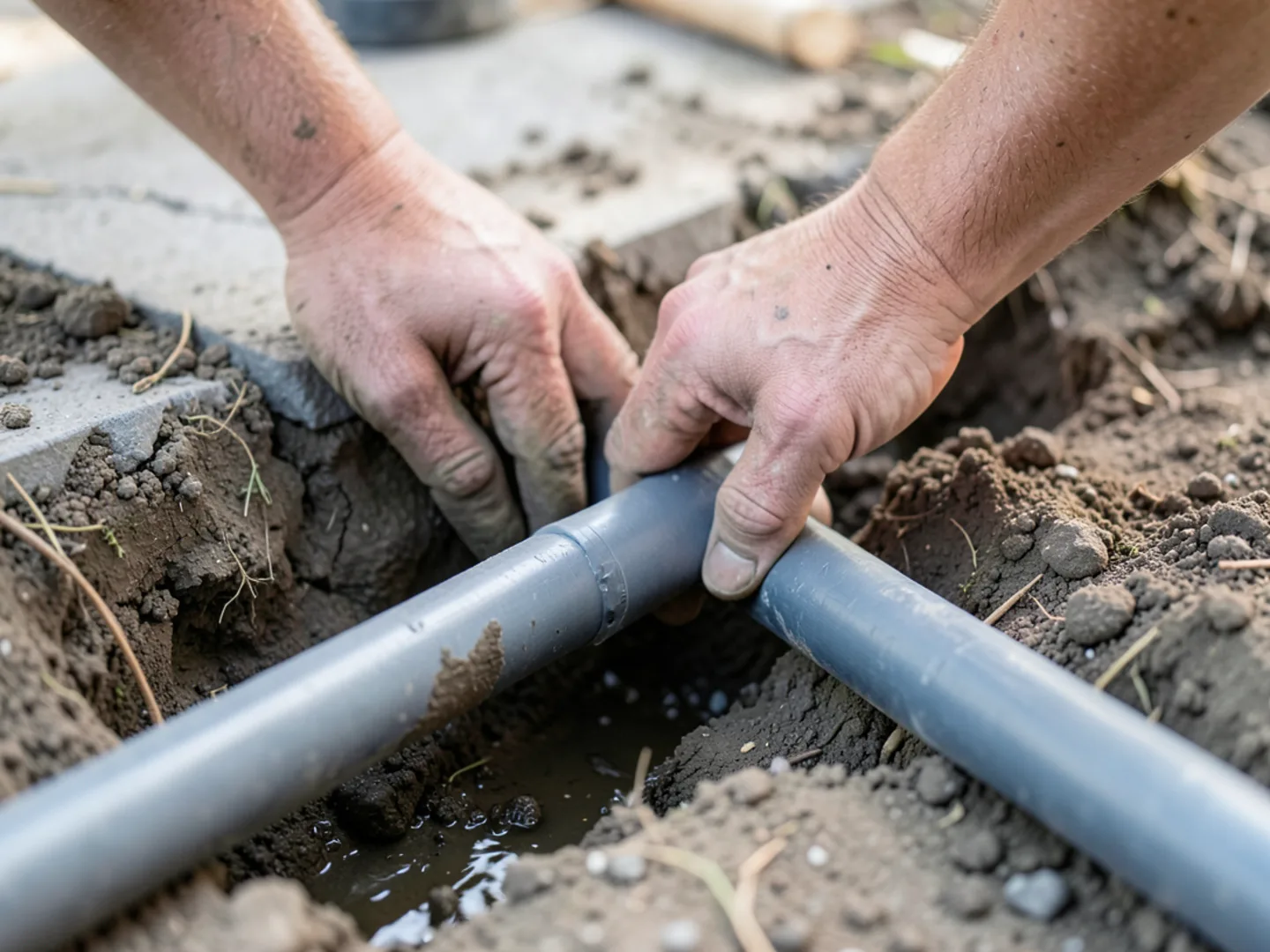
Signs of a leaking main water line in your yard
Your main underground water service pipe operates under constant municipal pressure between 60 and 95 PSI. When soil movement, rock impingement, or joint corrosion causes a fracture, water pushes upward toward the surface. Common symptoms of an underground water line leak include: (1) Persistent soft, saturated, or spongy patches of grass in your front yard during warm dry weather when irrigation is turned off; (2) Standing water pooling inside or around the concrete municipal water meter box near the sidewalk or curb; (3) A sudden, unexplained reduction in volume throughout your home when two fixtures run simultaneously, such as a shower losing pressure when a washing machine fills; (4) Cracking, lifting, or settling in front concrete walkways, asphalt borders, or paver driveways; (5) The small flow indicator triangle or digital dial on your water meter turning continuously when every faucet, hose bib, and toilet valve inside the house is tightly shut off.
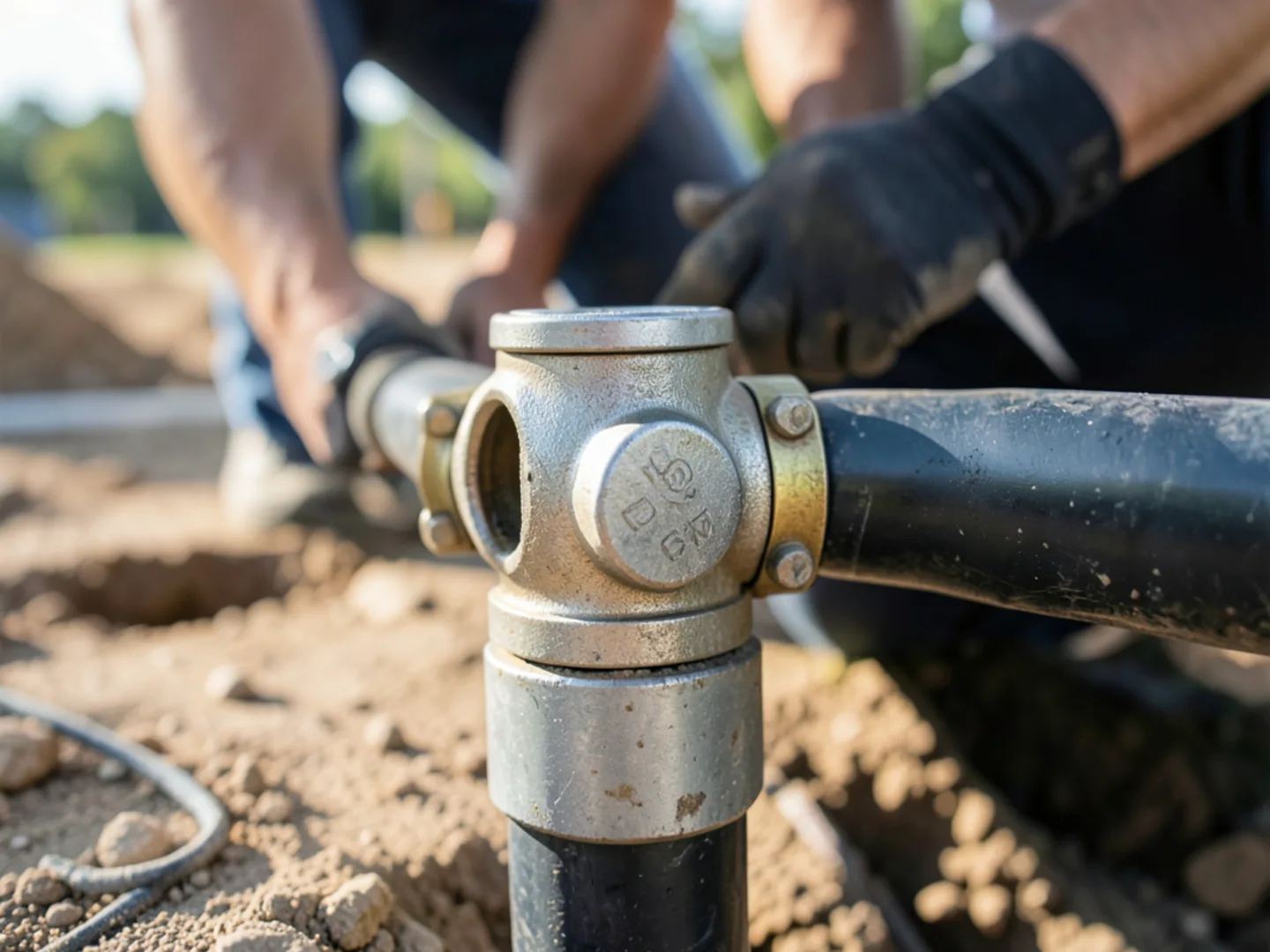
Property line boundaries and utility ownership rules in Corona
Corona property owners frequently wonder who is responsible for repairing an underground water line leak near the street. The municipal water utility—whether the City of Corona Department of Water and Power (Corona DWP) or the Western Municipal Water District (WMWD)—owns and maintains the high-pressure water main beneath the street, the curb corporation stop, the water meter box, and the threaded brass coupling on the street side of the meter. The property owner owns and is 100 percent financially responsible for the private service line starting immediately at the meter discharge coupling, extending across the front yard, and connecting to the main shutoff valve at the house foundation. If water pools on the street side of the meter, call the city utility desk. If water emerges on the yard side of the meter or causes the dial to advance, the repair falls under private homeowner responsibility.
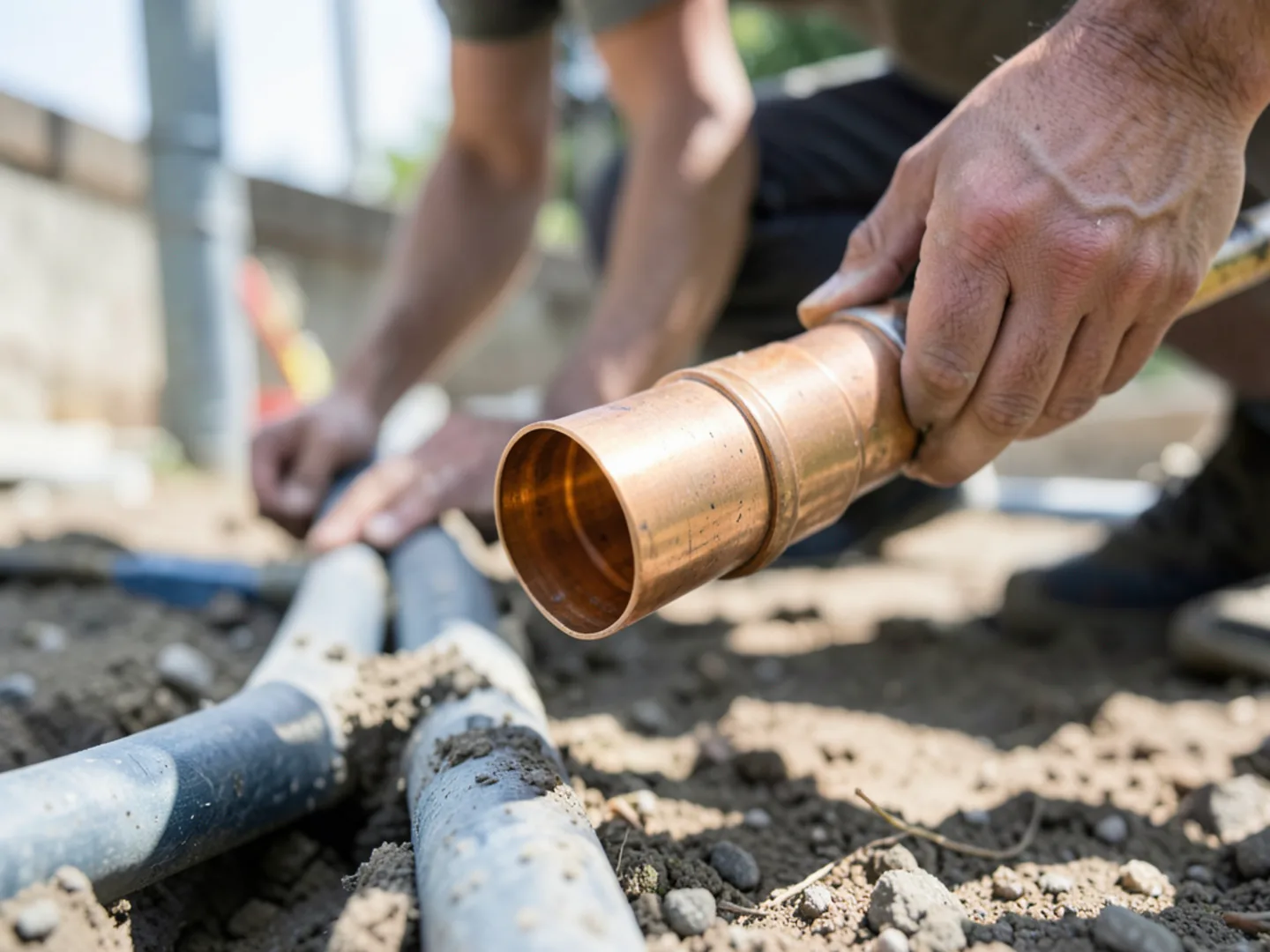
Why underground water lines fail across Corona neighborhoods
Underground water service lines throughout Corona experience severe environmental and metallurgical stressors. In older citrus-belt neighborhoods surrounding the historic Grand Boulevard core, homes constructed before 1970 still rely on threaded galvanized iron service pipes. Decades of contact with hard tap water have corroded these pipes from the inside out, choking water volume with rust and causing brittle seam splits. In 1980s and 1990s suburban tracts, builders frequently ran soft copper underground without proper silica sand bedding. Corona expansive alluvial clay soils expand dramatically during winter rainfall and contract into deep fissures during hot summer dry spells. This cyclical soil movement grinds crushed bedrock against the soft copper walls, wearing pinhole punctures into the bottom of the line. In addition, mature street trees, camphor trees, and eucalyptus roots wrap around service lines, exerting tremendous mechanical bending pressure on rigid fittings.
Step by step process for main water line repair and replacement
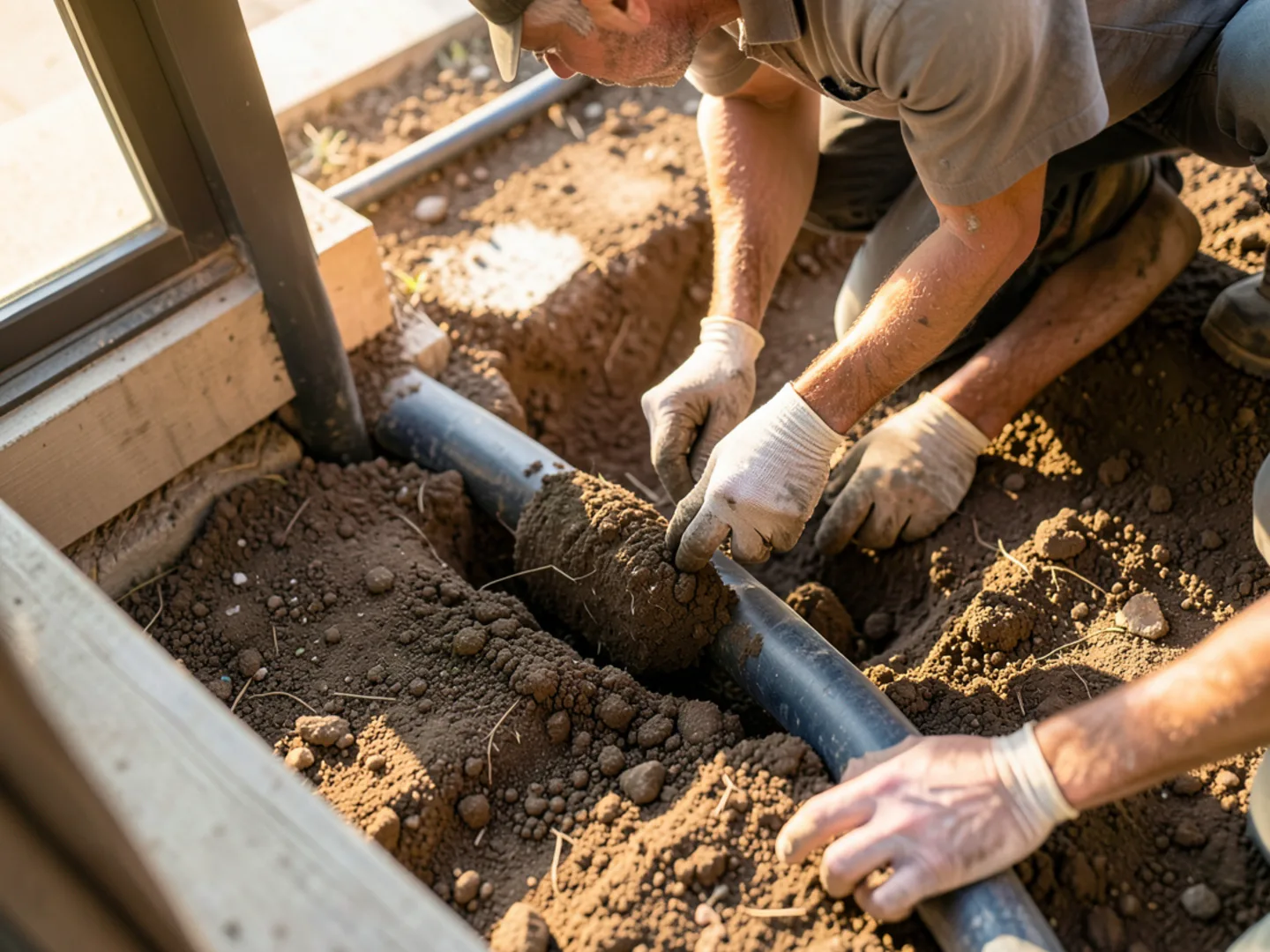
Our technicians execute a structured five-step replacement protocol designed to minimize property disruption and restore clean domestic water swiftly: Step 1: Utility Locating and Permitting. We verify property boundary markers, pull City of Corona eTRAKiT plumbing permits, and confirm DigAlert 811 color markings to identify buried gas, electrical, and telecommunication conduits. Step 2: Diagnostic Pressure and Ground Acoustic Testing. We connect digital pressure test manifolds to your hose bib and deploy ultrasonic ground listening discs to pinpoint the underground breach. Step 3: Minimal-Impact Access Pit Excavation. Rather than trenching your entire front yard, our crew excavates two small four-foot access pits—one at the city meter box and one at the home foundation riser. Step 4: Trenchless Pneumatic Pipe Pulling or Type K Installation. We feed a heavy-duty steel cable through the old damaged pipe, attach a splitting head and a continuous run of jointless 200 PSI-rated HDPE or continuous soft Type K copper, and hydraulically pull the new line directly through the existing path underground without disturbing driveways or sod. Step 5: Hydrostatic Testing and Municipal Signoff. We pressurize the new line to 150 PSI, verify zero pressure drop over 15 minutes, arrange the City of Corona building inspection, bed the line in clean builder sand, and mechanically tamp the soil back to grade.
Local repair options comparing spot repair to full replacement
When evaluating an underground leak, homeowners must choose between a localized spot repair and a complete service line replacement. If your water line is constructed of relatively new copper and non-invasive acoustic detection confirms the fracture occurred at a single loose connection fitting near the house riser, a localized spot excavation and brazed Type K copper sleeve repair is a sensible, economical solution. However, if your pipe is aged galvanized iron, deteriorating polybutylene, or thin-wall copper that has suffered multiple historical leaks, spot patching is merely temporary. Each spot repair leaves the remaining aged pipe vulnerable to pressure spikes and further corrosive degradation. In these circumstances, installing a single continuous, jointless water service line from the curb to the house provides lasting security, permanently eliminates underground joint failures, and restores full municipal water pressure to every fixture in your home.
Cost factors for residential water line work in Corona
The cost of repairing or replacing a main water service line depends on four physical site variables. First is the distance from the street meter to the house riser: standard suburban setbacks in Corona range from 35 to 60 feet, while larger foothill properties in Corona Hills or equestrian parcels in Norco can reach 100 to 150 feet. Second is the depth of the line: California Plumbing Code mandates a minimum burial depth of 12 inches below the frost line (typically 24 to 30 inches deep in Southern California to prevent accidental damage from gardening tools and aerators). Third is surface restoration: pulling pipe beneath an existing concrete driveway or mature landscape bed using trenchless methods prevents thousands of dollars in hardscape replacement expenses. Fourth are municipal permit fees and traffic control requirements if the connection requires work adjacent to the municipal parkway. We provide itemized, written pricing on site before any digging begins.
California plumbing code standards and Corona permit inspections
All underground water service piping in Corona must satisfy the strict requirements of Chapter 6 of the California Plumbing Code (CPC Title 24, Part 5). State regulations mandate that potable water lines maintain a horizontal clearance of at least 10 feet from residential sewer laterals, or be installed on a solid shelf at least 12 inches above the sewer line in an approved separate trench. Materials must be lead-free NSF-61 certified Type K copper, brass, or approved cross-linked polyethylene and HDPE. Our licensed C-36 plumbing contractors file the necessary building permits through the City of Corona Community Development Department, maintain required contractor surety bonds and liability coverage, and coordinate on-site rough-in inspections with municipal building officials before backfilling trenches.
Why choose Corona CA Plumbing for underground water line service
Our central workshop at 685 E Grand Blvd in Corona houses complete underground excavation and trenchless pipe-pulling rigs, commercial compaction equipment, and electronic leak locating instruments. When you contact our service desk, you speak directly with local professionals who understand Western Riverside County soil mechanics and municipal water pressures. We arrive in fully equipped mobile service vehicles carrying lead-free Ford meter box couplings, brass ball valves, and industrial-grade piping, allowing us to stabilize emergencies quickly and complete permanent replacements without multi-day delays.
Need plumbing service in Corona or surrounding communities?
Our central dispatch is stationed on East Grand Boulevard. Whether you are dealing with an urgent leak in South Corona, need sewer diagnostics in Norco, or require water heater replacement in Eastvale, our licensed technicians arrive prepared with complete equipment rigs. Read more about our overall plumber in Corona CA services, or contact our shop at (207) 419-2600.