What our comprehensive drain cleaning service includes
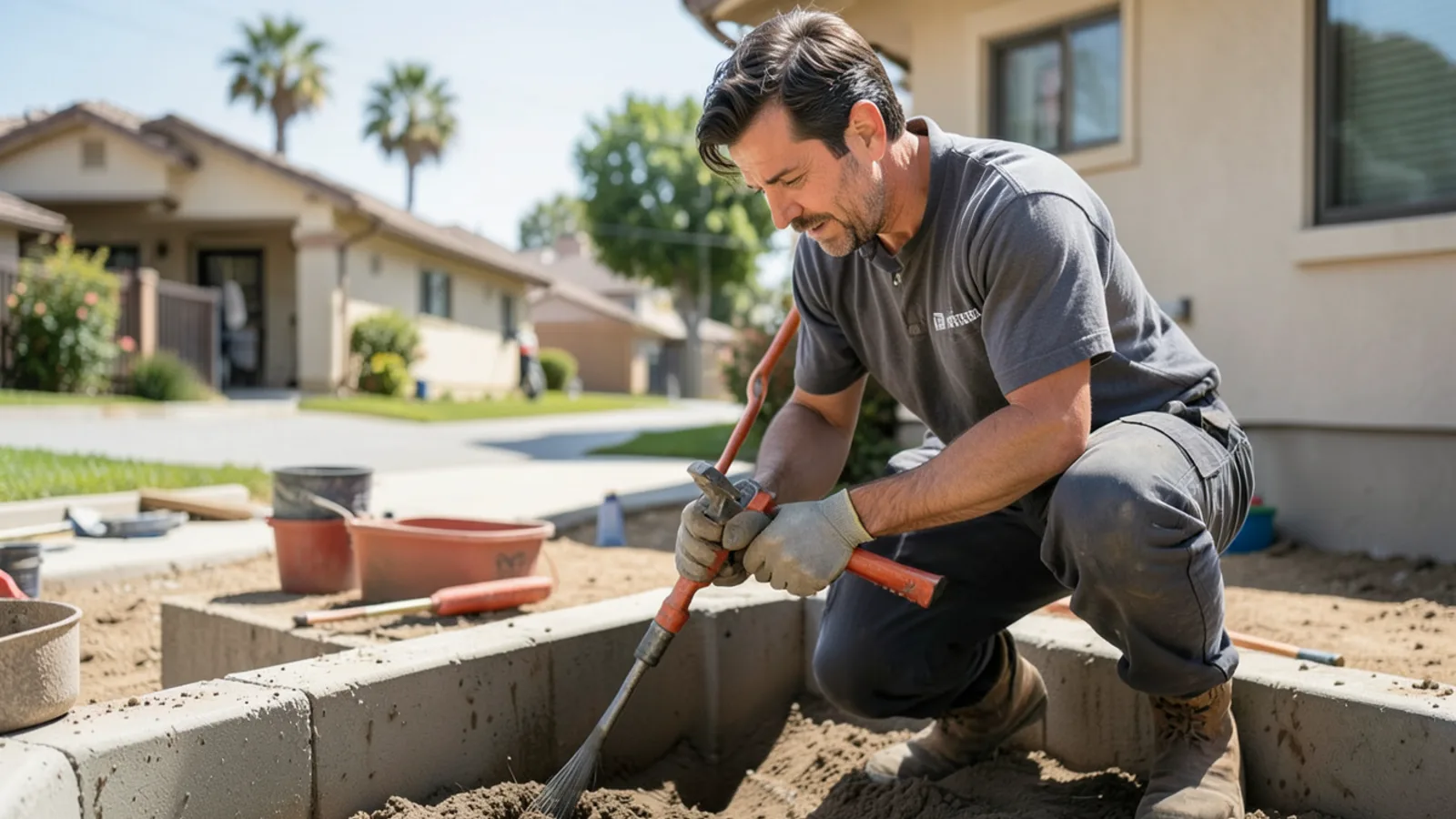
When wastewater drains sluggishly or backs up into residential fixtures, our licensed plumbing technicians deliver thorough mechanical clearing, video inspection, and permanent drainage restoration. Every drain cleaning visit dispatched from our Grand Boulevard shop includes: (1) Prompt same-day arrival with fully outfitted drain cleaning machinery; (2) Pre-clearing diagnostic assessment to pinpoint whether the stoppage is localized to an individual fixture trap or seated deep within the primary building lateral; (3) Professional mechanical cable snaking using heavy-gauge inner core cables equipped with specialized cutting and retrieval heads; (4) Protective containment mats, floor runners, and splash shields to maintain clean living areas; (5) High-volume hydraulic flush testing across upstream fixtures to confirm smooth gravity discharge; (6) Digital optical fiber-optic camera inspection through cleanouts to verify pipe wall condition; (7) Compliance evaluation under California Plumbing Code Chapter 7 standards for proper cleanout accessibility and venting.
Signs of severe drain blockages in Corona homes
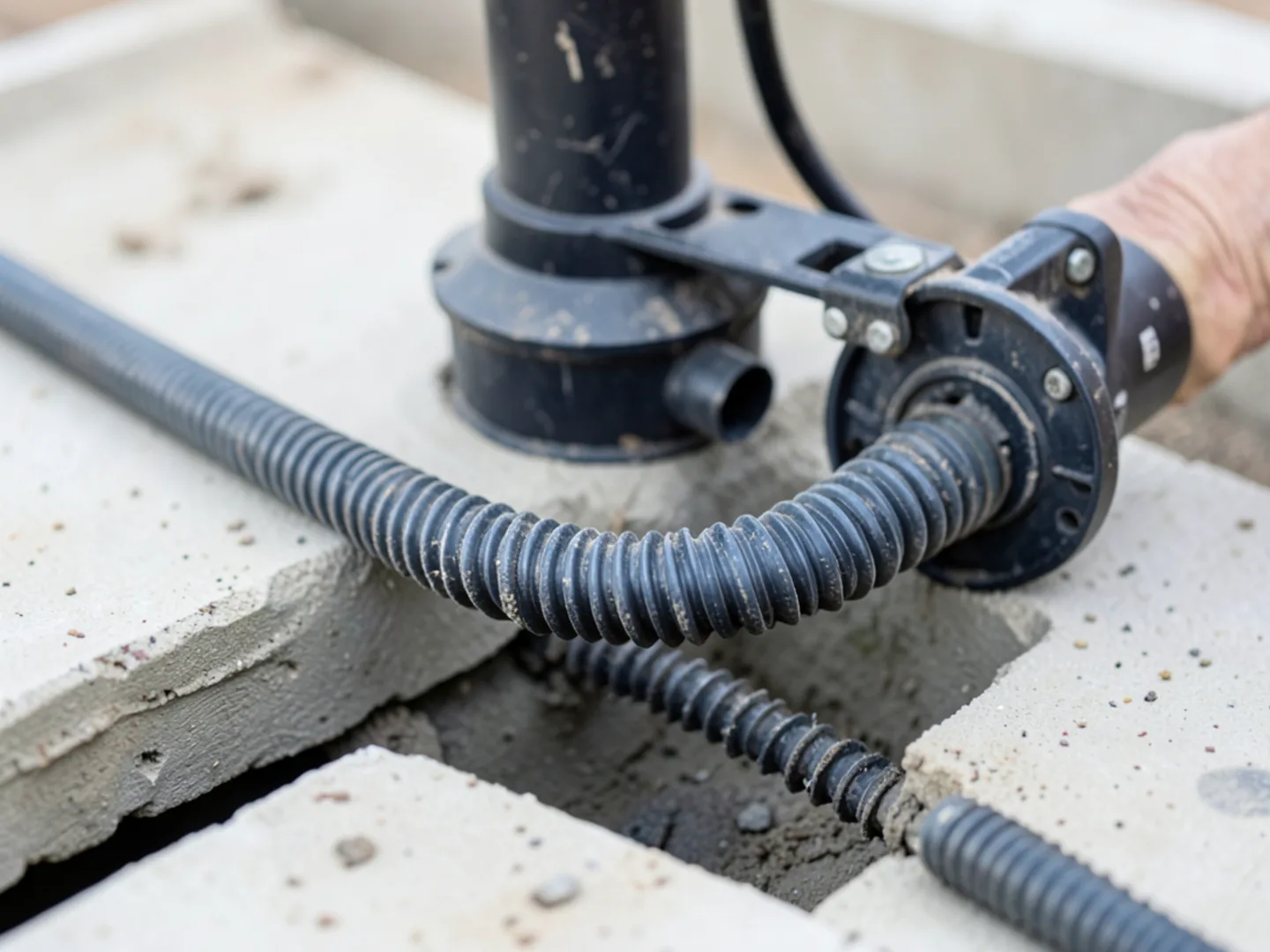
Drainage systems rarely fail without warning. Recognizing early warning signals allows Corona homeowners to address restricted waste lines before sewage spills over bathroom floors: (1) Multiple Fixture Backups: If running your kitchen sink makes water rise in a laundry standpipe, or flushing a toilet produces bubbling water in an adjacent shower pan, the blockage sits in the common 3-inch or 4-inch main building drain. (2) Deep Gurgling Sounds: Gurgling noises coming from bathroom drains indicate negative air pressure inside the drainage system, created when trapped wastewater struggles to pass an obstruction and pulls air through fixture P-traps. (3) Foul Sewer Odors: Persistent rotten smells near sink drains signal rotting food grease, decaying hair masses, or depleted P-traps that allow sewer gas to escape into the living space. (4) Persistent Standing Water: Water pooling around your feet during a shower indicates that soap residue, body oils, and hair have formed a dense plug inside the 2-inch shower trap.
Why drains clog repeatedly in Corona households
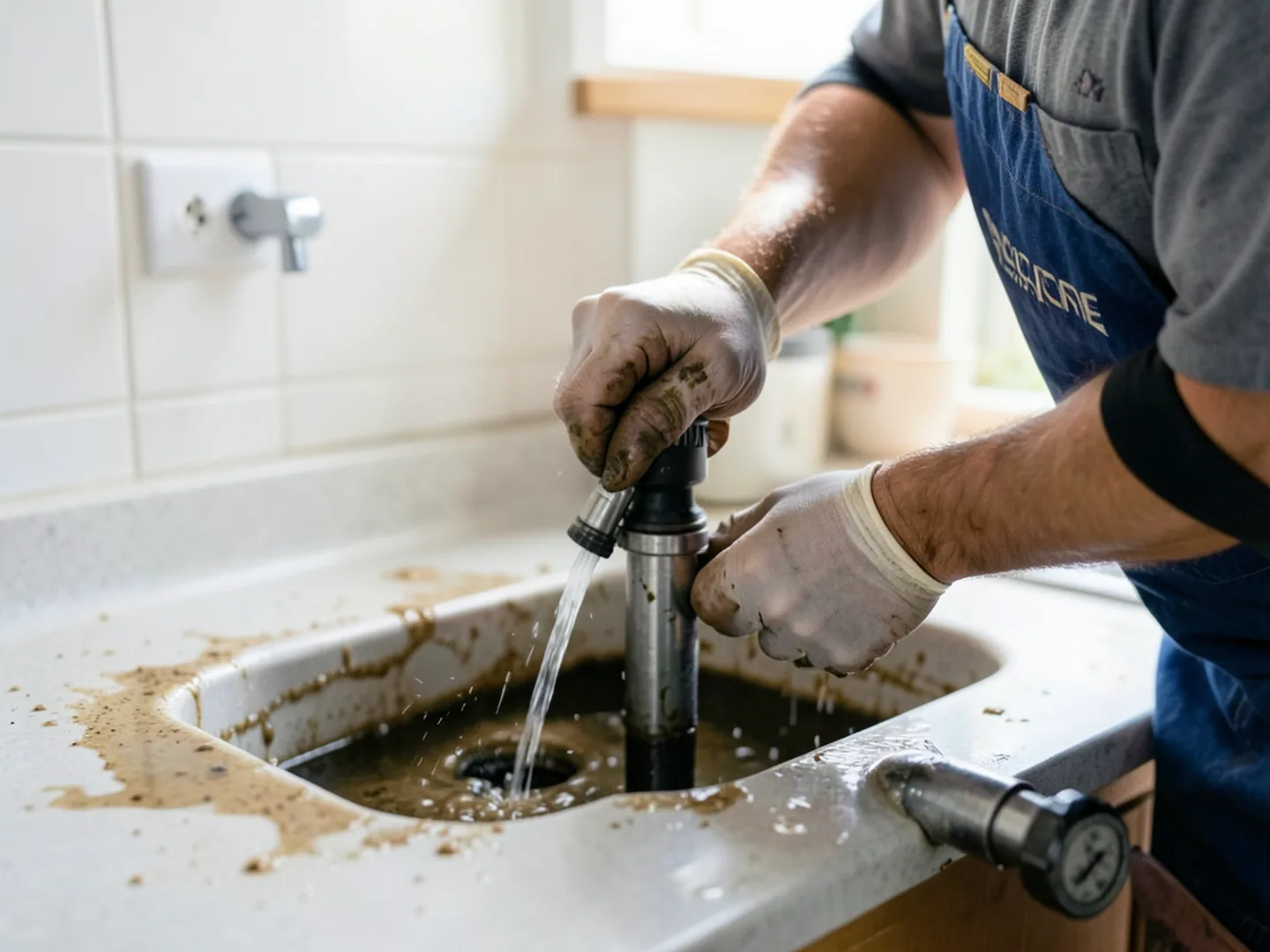
Drain lines in Corona face distinct local challenges that shorten the lifespan of standard cleanings if not mechanically addressed: First, Corona Department of Water and Power (DWP) water contains elevated mineral concentrations (12 to 22 grains per gallon of total hardness). Over years of use, dissolved calcium carbonate precipitates onto the interior walls of ABS, cast iron, and galvanized waste pipes, creating rough calcified scale that snags passing debris like sandpaper. Second, kitchen disposals frequently receive cooking grease, butter, and animal fats. While liquid when hot, grease cools upon contacting subterranean sub-slab pipes, undergoing saponification and hardening into dense white soap deposits that choke pipe diameters. Third, in established Corona neighborhoods around Grand Boulevard, historic downtown, and older citrus ranch properties, mature pepper trees, eucalyptus, and ficus roots seek underground moisture. Tree roots penetrate aged mortar joints in clay pipes, expanding into thick root balls that collect passing toilet paper and flushable wipes.
Our five-step mechanical drain cleaning process
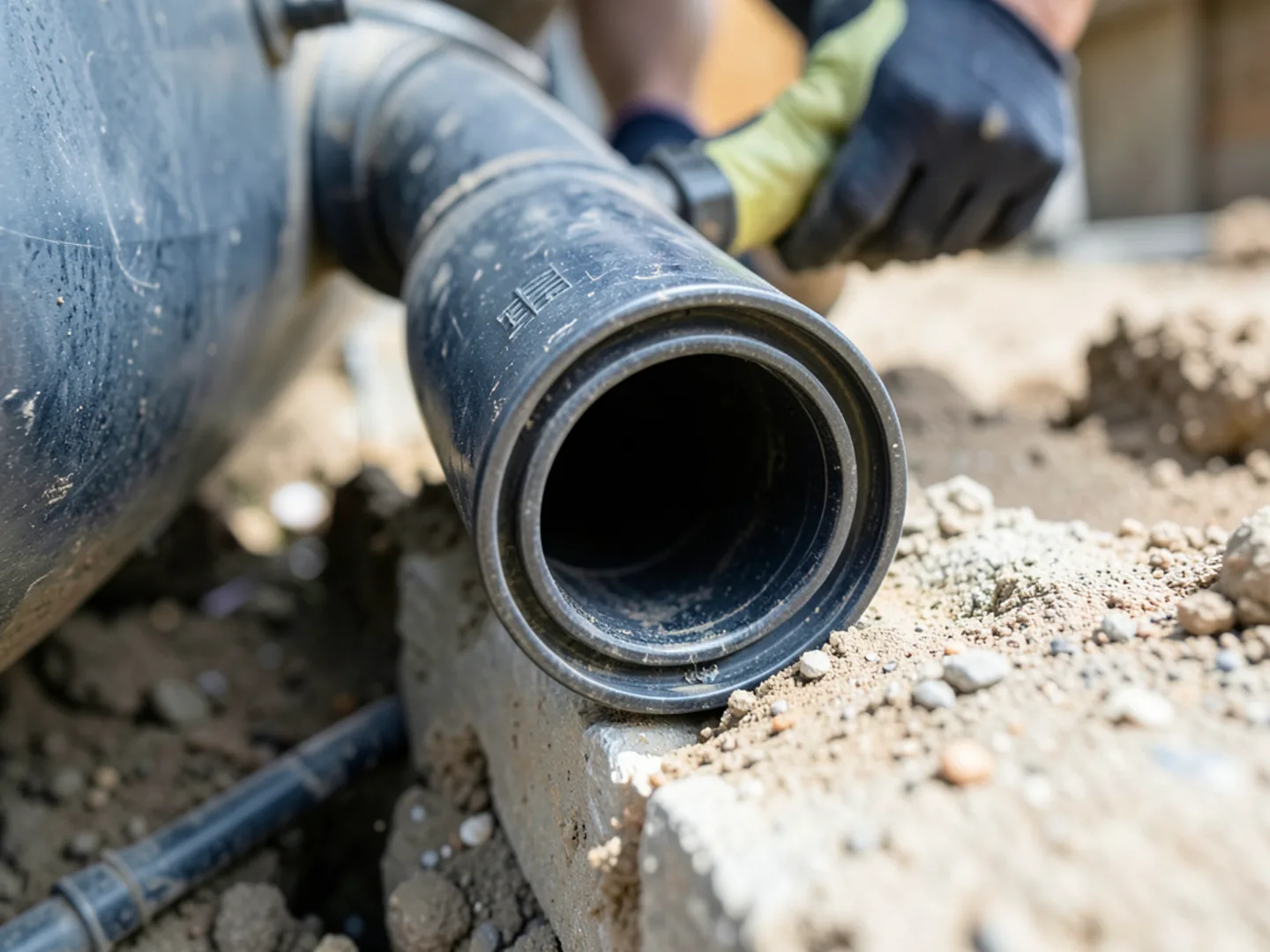
We clear blocked waste systems through a proven five-stage mechanical sequence designed to restore full flow without pipe damage: Step 1: Cleanout Access and Worksite Protection. Our technicians locate the primary two-way ground-level cleanout or remove the fixture P-trap, laying down heavy neoprene floor runners to safeguard finished surfaces. Step 2: Cable and Tooling Selection. We select the correct machine profile—using lightweight 5/16-inch or 3/8-inch cables for delicate secondary sink arms, or heavy 5/8-inch to 3/4-inch tri-extruded cables powered by commercial Ridgid drum machines for main 4-inch sewer lines. Step 3: Mechanical Obstruction Clearing. We advance the rotating cable through the blockage, alternating between spear-head cutters, grease-shaving blades, and root-slicing C-cutters to break apart dense plugs and shave pipe walls clean. Step 4: High-Volume Hydraulic Load Flushing. Once the obstruction breaks free, we run sustained hot water through all upstream fixtures simultaneously, testing continuous flow under full domestic load to carry pulverised residue into the municipal sewer. Step 5: Cleanout Re-Sealing and Verification. We replace corroded or damaged cleanout plugs with new brass or mechanical expansion caps, ensuring a gas-tight, code-compliant seal.
When mechanical snaking needs to be upgraded to hydro-jetting
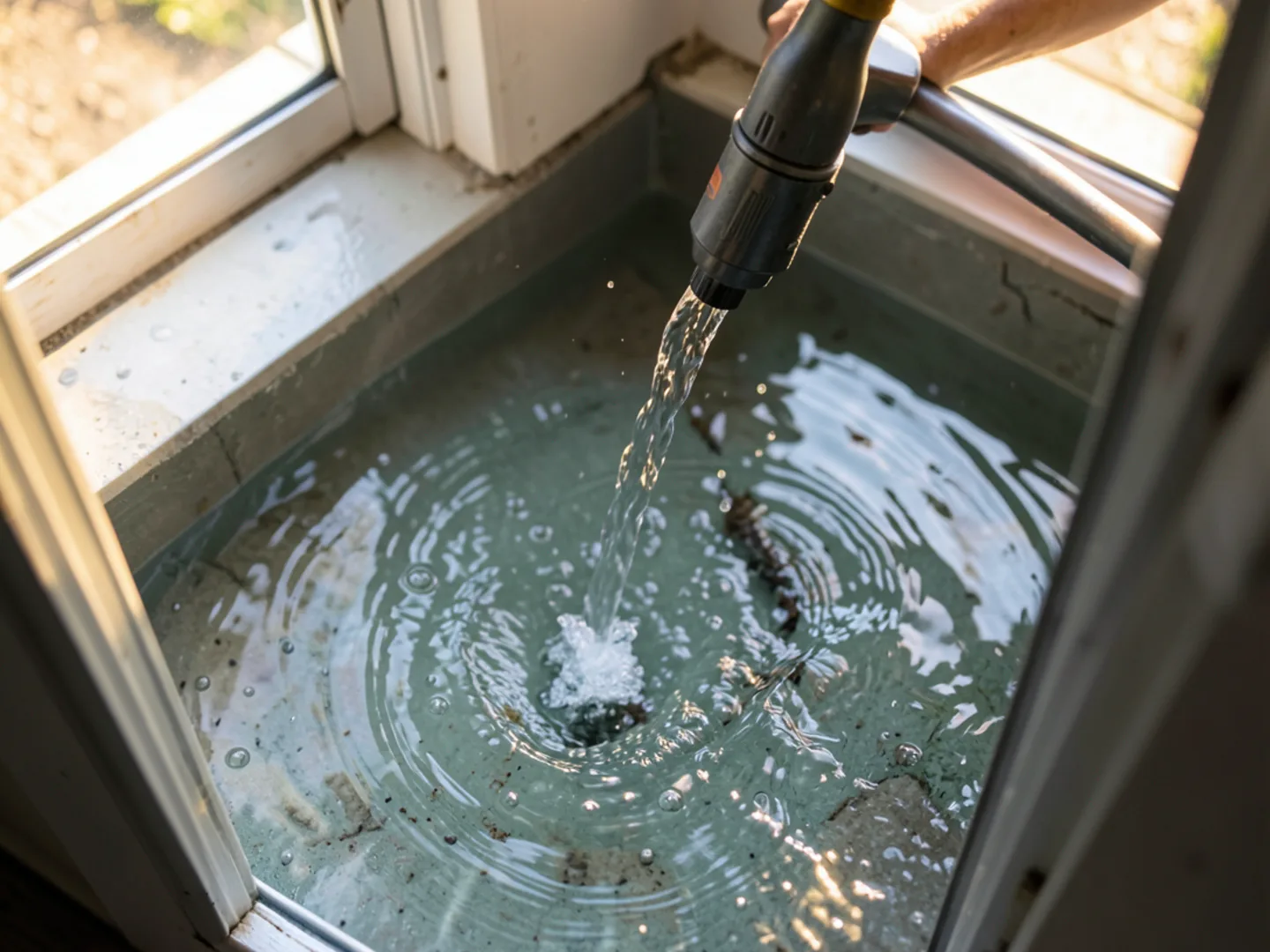
Mechanical cable snaking is highly effective for punching through acute blockages, retrieving foreign objects, and cutting through immediate root intrusions. However, rotating steel cables primarily clear a path equal to the width of the spinning cutting blade. In cases where drains suffer from years of thick congealed grease buildup, heavy scale accumulation, or dense root curtains lining the entire circumference of the pipe, snaking leaves substantial residue behind. When our fiber-optic camera reveals calcified scale or extensive grease coats, we recommend advancing to commercial hydro-jetting. Hydro-jetters blast up to 3,500 PSI of water through reverse-facing ceramic nozzles, scouring pipe walls 360 degrees around to wash away mineral deposits and restore the full interior diameter of the drainage line.
Transparent drain cleaning cost factors
Drain clearing costs are governed by objective mechanical variables that our technicians explain clearly before beginning work: (1) Point of Access: Clearing a main line through an accessible exterior ground-level cleanout requires less labor than removing and reinstalling a heavy porcelain toilet or snaking from a steep second-story roof vent stack. (2) Distance and Location of Blockage: Obstructions located 10 feet into a branch sink line require smaller equipment than root masses situated 80 feet out near the street curb connection. (3) Severity and Composition of Obstruction: Clearing soft organic food waste or hair requires standard augering, whereas heavy tree root intrusion, concrete slurry, or broken pipe offsets require specialized cutting heads and extended labor time. (4) Equipment Requirements: We provide complete upfront quotes covering cable snaking, cleanout cap replacements, and optional post-clearing camera verifications with no hidden travel fees.
California plumbing code compliance and Corona permit standards for drain cleaning
All drainage installations and repairs in Corona must comply with California Plumbing Code (CPC) Title 24 Part 5, Chapter 7 standards. CPC regulations mandate that cleanouts must be provided at the upper terminal of each horizontal drainage pipe, at every change of direction exceeding 135 degrees, and at intervals not exceeding 100 feet on horizontal sewer lines. Furthermore, cleanouts must be positioned with adequate physical clearance—at least 18 inches in front of cleanouts on pipes 2 inches or smaller, and 24 inches for pipes 3 inches and larger—to permit full mechanical augering. If drain snaking uncovers a collapsed, back-pitched, or cracked sewer pipe requiring excavation and section replacement, our licensed C-36 contractors pull the required plumbing permits through the City of Corona eTRAKiT portal and schedule municipal inspections to certify compliance.
Commercial diagnostic machinery and professional field tooling
Clearing stubborn obstructions requires heavy commercial machinery far more capable than lightweight rental snakes. Our service vehicles dispatched from 685 E Grand Blvd carry industrial Ridgid K-400 drum machines for residential sink and laundry branches, alongside high-torque Ridgid K-7500 commercial machines capable of driving 100 feet of heavy 3/4-inch cable through dense root clusters. We utilize specialized drop-head augers to navigate sharp sanitary tees, heavy grease cutters to scrape hardened soap deposits, and serrated saw-tooth root extractors. For thorough inspection, our crews deploy Ridgid SeeSnake digital video inspection cameras equipped with self-leveling heads, high-intensity LED rings, and integrated 512Hz sonde transmitters to trace the exact depth and trajectory of underground piping.
Need plumbing service in Corona or surrounding communities?
Our central dispatch is stationed on East Grand Boulevard. Whether you are dealing with an urgent leak in South Corona, need sewer diagnostics in Norco, or require water heater replacement in Eastvale, our licensed technicians arrive prepared with complete equipment rigs. Read more about our overall plumber in Corona CA services, or contact our shop at (207) 419-2600.