
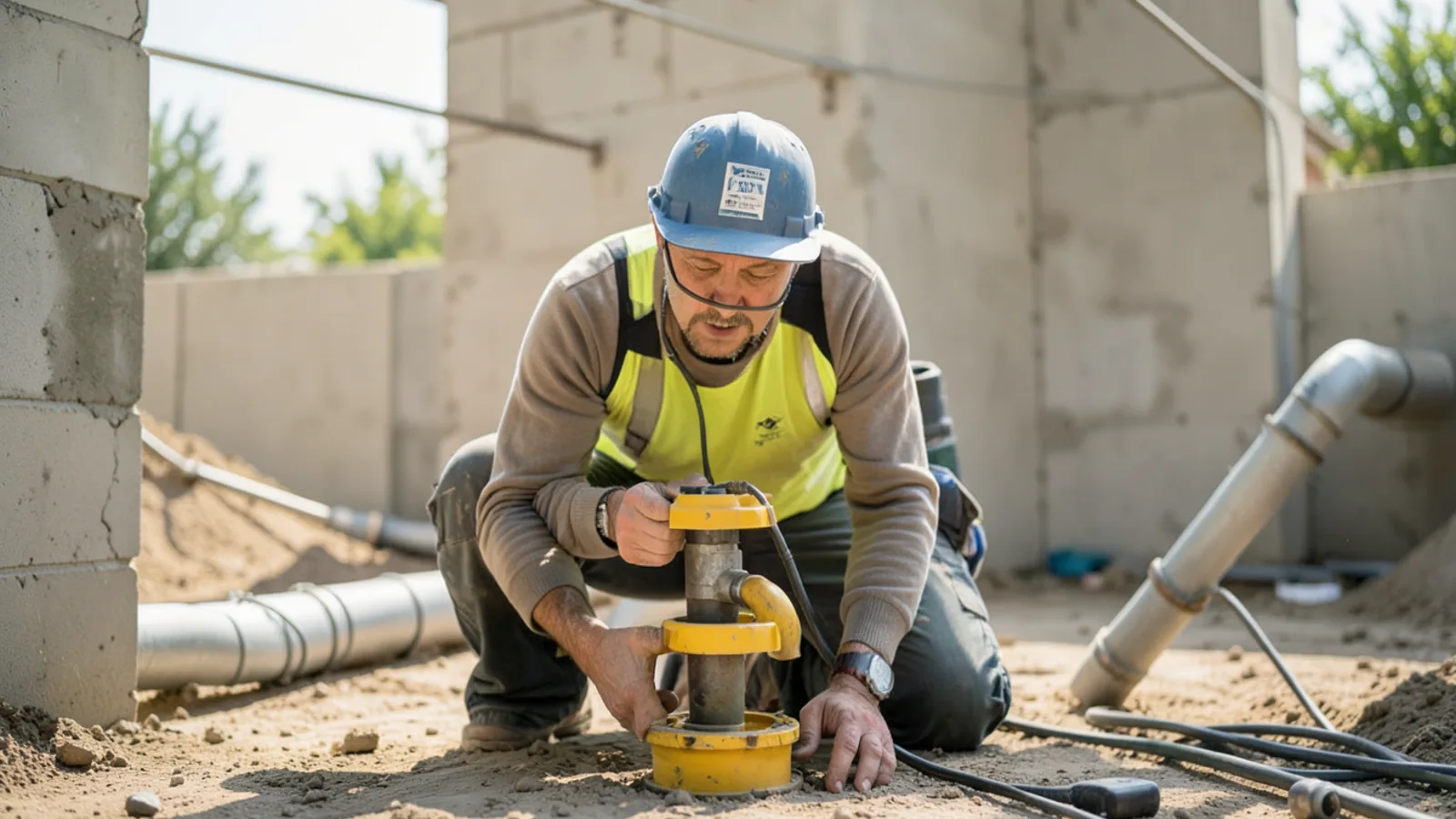
Why a sewer camera inspection is non-negotiable for homebuyers
When purchasing a residential property in Corona, Norco, Eastvale, or anywhere in Western Riverside County, ordering a sewer lateral video camera inspection is the single most valuable pre-closing due diligence inspection a buyer can conduct.Most prospective homebuyers assume that their standard general home inspection covers the entire plumbing infrastructure. In reality, standard California real estate inspection agreements explicitly exclude non-visible, underground sewer laterals. A general home inspector merely runs water in the sinks and flushes toilets for two or three minutes. If the underground sewer pipe is eighty percent occluded by invasive tree roots, crushed beneath a concrete driveway, or sagging into an extensive standing belly, water will still drain normally during a brief fixture test. The catastrophic sewage backup occurs two weeks after closing when the new homeowner moves in, runs consecutive loads of laundry, and takes multiple showers.In California, homeowners own and are legally responsible for the entire sewer lateral from the house exterior cleanout all the way to the municipal sewer main connection in the middle of the street. Replacing a failed sewer lateral costs between $4,500 and $18,000 depending on depth, landscaping, and street excavation requirements. Investing $250 to $350 in a professional sewer camera inspection during your physical contingency period provides clear video proof to negotiate thousands of dollars in seller repair credits or demand a complete trenchless repair before escrow closes.
The blind spot in standard California home purchase inspections
Professional home inspectors operating under the California Real Estate Inspection Association (CREIA) and American Society of Home Inspectors (ASHI) standards perform thorough evaluations of visible roof assemblies, electrical panels, HVAC units, and interior fixtures. However, their scope of practice strictly excludes underground utility piping buried beneath soil, foundations, and driveways.A four-inch residential sewer line has significant internal volume capacity. Running a kitchen faucet and flushing two toilets consumes less than fifteen gallons of water. If a sewer lateral has standing sludge, structural fractures, or heavy root masses, the pipe can easily store that modest volume without backing up into the home. The seller may not even be aware of the underlying defect if they lived alone or rarely ran high-volume laundry cycles.When a family of four moves into the home, daily water discharge increases to 200 to 300 gallons. The line quickly fills past its restricted capacity, sending raw blackwater backward into ground-floor bathtubs, showers, and toilet bases. Discovering a collapsed sewer pipe on your first weekend in a new home turns an exciting milestone into an expensive nightmare.
Historical sewer pipe materials in Corona and the Inland Empire
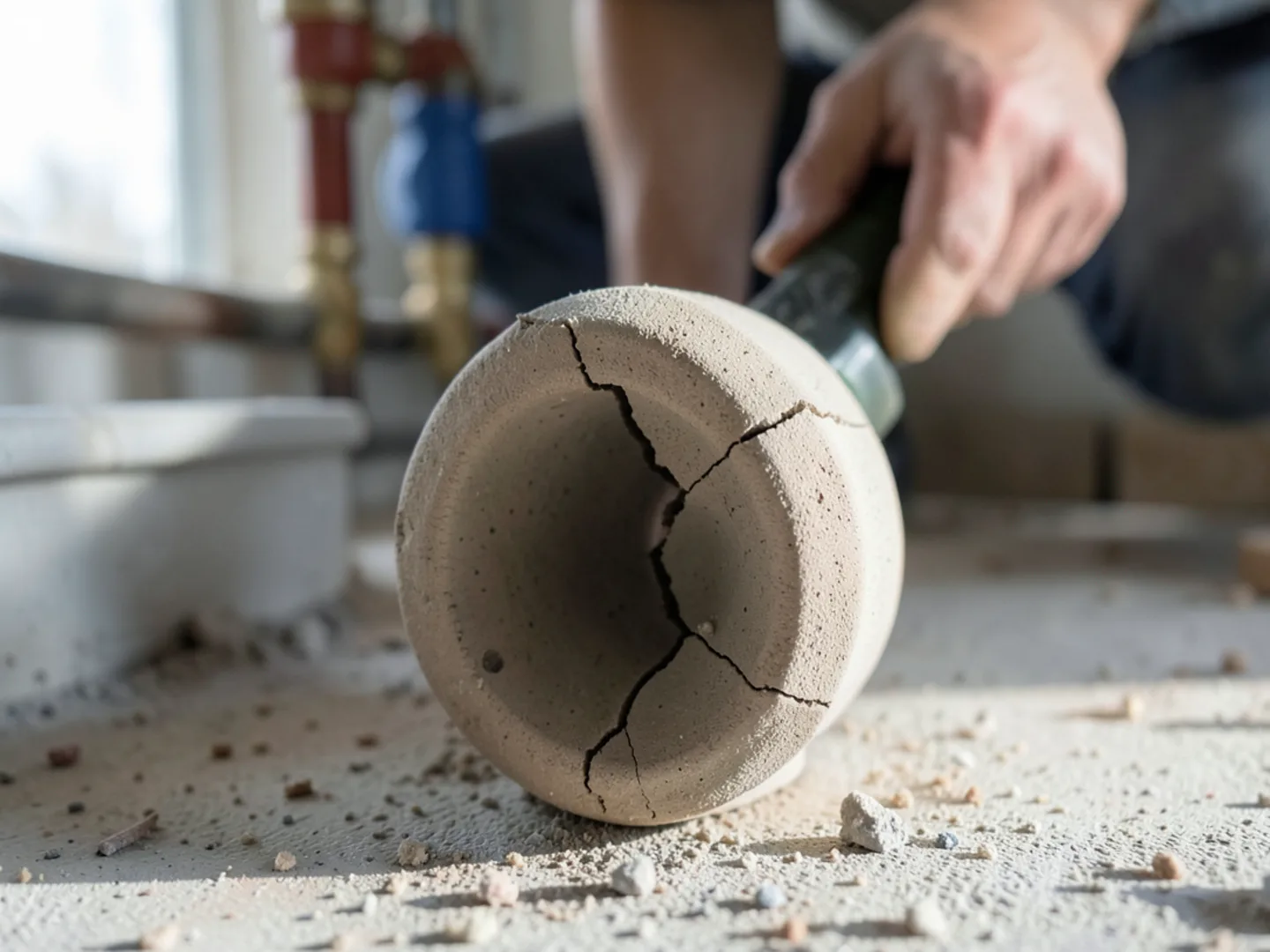
Corona features architectural eras spanning more than a century, and the reliability of an underground sewer lateral is heavily dictated by the decade in which the property was built:• 1900s to 1950s Downtown and Historic Citrus Estates: Residences along Grand Boulevard, Main Street, and early Corona citrus parcels utilize vitrified clay tile (VCT) sewer pipes. Clay pipes were manufactured in three-foot to four-foot segments joined with mortar or tar-soaked oakum. Over decades of ground settlement and seismic tremors, mortar washes away, creating open gaps. Mature eucalyptus, pepper, and palm tree roots penetrate these joints, fracturing the brittle clay pipe bells and causing structural cave-ins.• 1950s to 1970s Mid-Century Subdivisions: Homes constructed during the post-war suburban expansion frequently feature cast iron or Orangeburg (bituminous coal-tar-impregnated cellulose fiber) piping. Cast iron suffers from bottom-channeling corrosion, where the bottom wall of the pipe thins out, creating jagged rust nodules (tuberculation) that snag toilet paper. Orangeburg piping is notoriously fragile, frequently flattening into an oval shape or collapsing entirely under ground pressure.• 1970s to 1990s Tract Communities: Properties in South Corona, Sierra del Oro, and Mountain Gate utilize black ABS or white PVC plastic piping. While immune to rust and root penetration through pipe walls, these lines frequently suffer from joint separations and pipe bellies caused by shifting alluvial soils, seismic movement, or improper contractor bedding during initial subdivision grading.
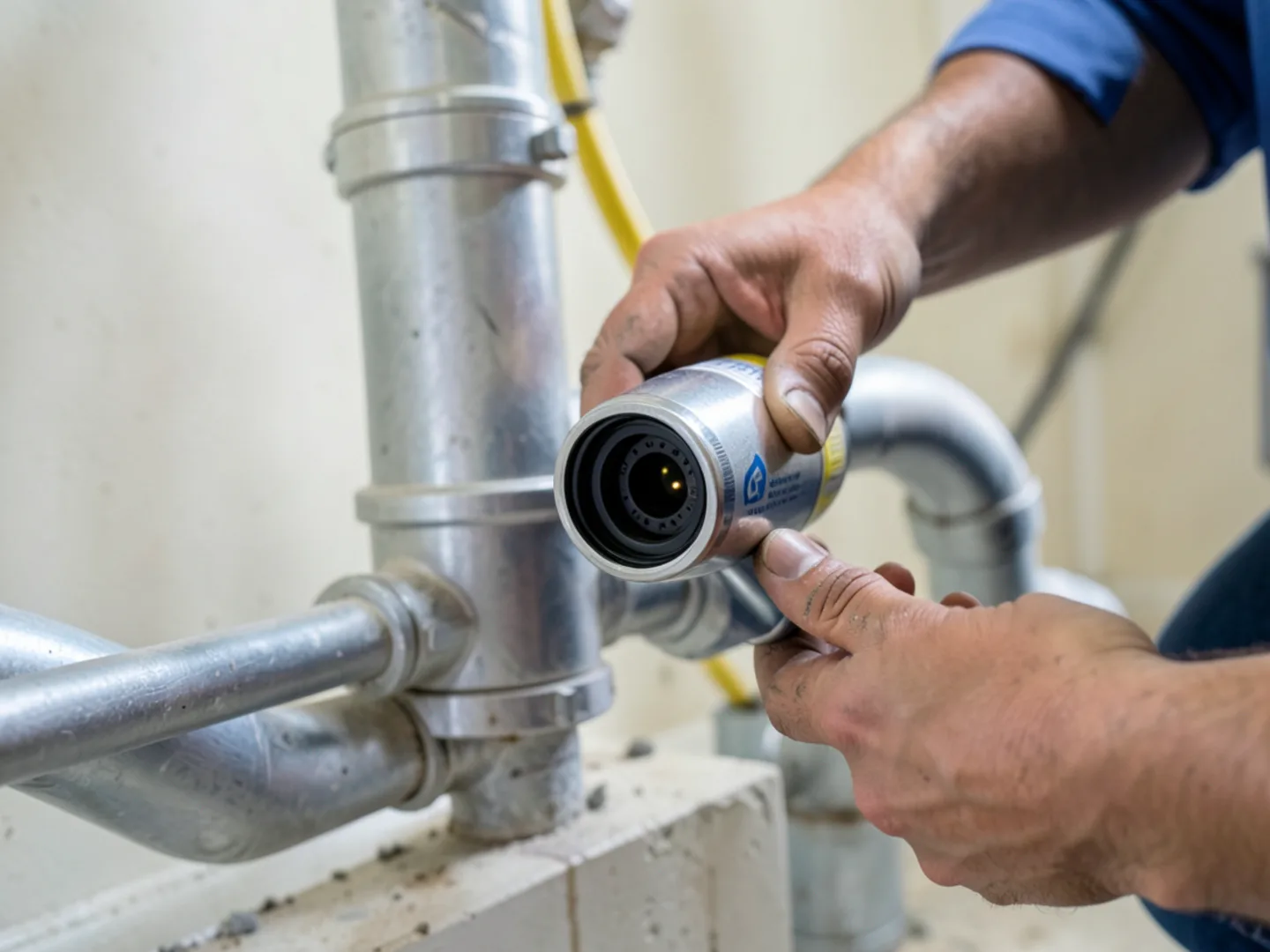
What high-definition sewer camera diagnostics reveal
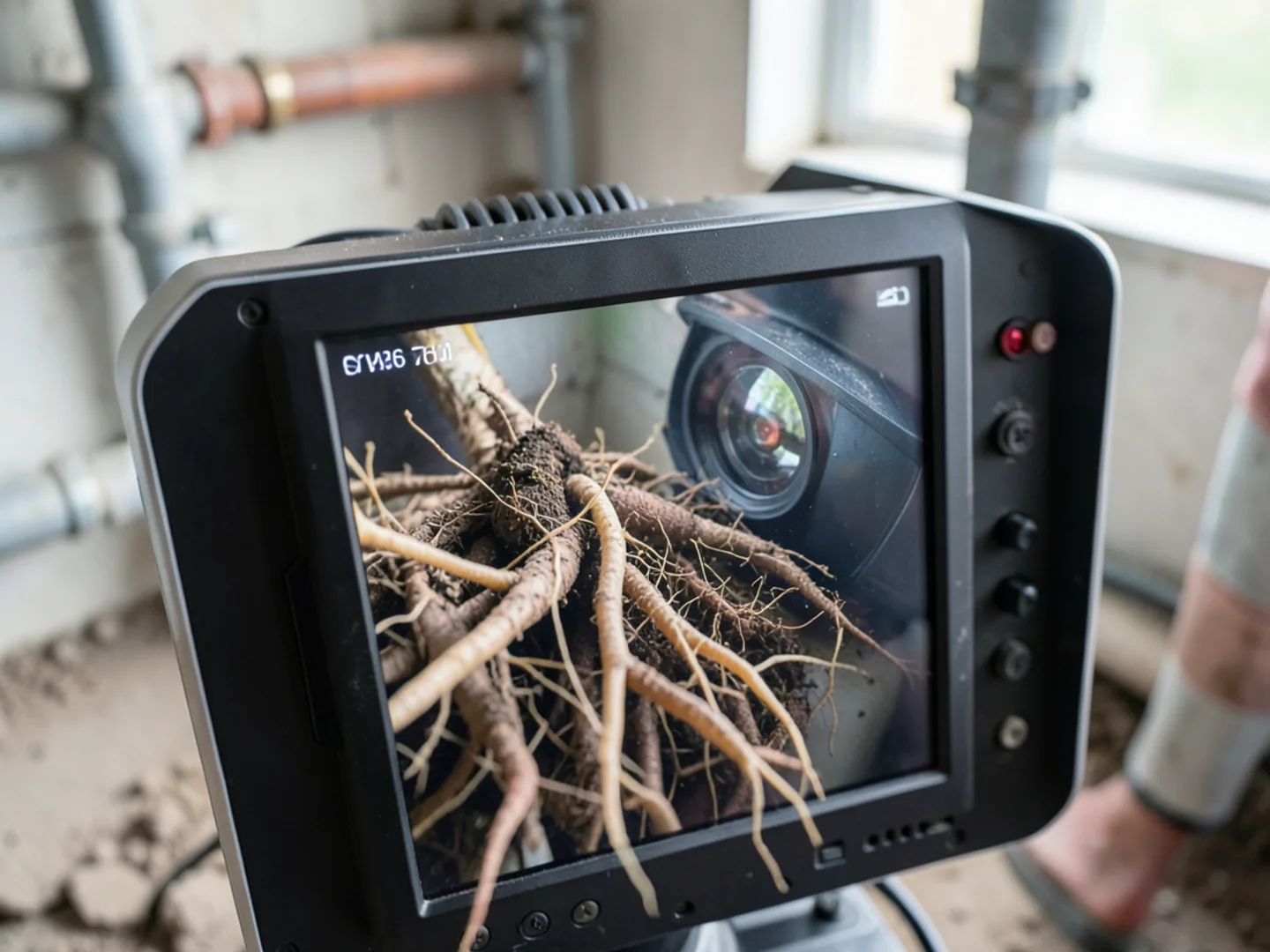
A professional sewer camera survey deploys advanced optical diagnostic technology to inspect the entire underground drainage pathway from the house to the municipal street main. The technician inserts a high-resolution, self-leveling color camera head mounted on a semi-rigid fiber-optic push cable into the primary exterior ground cleanout.As the camera advances through the pipe, a high-intensity LED light ring illuminates the pipe interior, broadcasting live video to an outdoor digital monitor. An on-screen digital distance counter tracks the exact footage traveled. The technician examines the line for five critical failure modes:1. Invasive Tree Roots: The camera reveals whether root intrusion consists of minor fine hair roots or thick, woody root mats that completely obstruct flow and fracture pipe walls.2. Pipe Offsets and Misalignments: Shifting ground causes pipe joints to separate, creating vertical steps or lips that catch solids and cause repeated stoppages.3. Pipe Bellies and Negative Slope: A pipe belly is a low dip where the line loses its required one-quarter-inch per foot gravitational pitch. The camera submerges underwater, identifying areas where standing sewage and grease collect.4. Structural Cracks and Collapses: The survey identifies longitudinal stress fractures, missing pipe sections, and structural crushing caused by heavy vehicle traffic across driveways.5. Integrated 512Hz Sonde Radio Locating: The camera head houses a radio transmitter. When a defect is discovered, the technician uses a digital receiver wand on the ground surface above to pinpoint the exact location and depth (such as four feet beneath the driveway pavers), eliminating guesswork.
Sewer lateral inspection checklist for California homebuyers
When scheduling a sewer camera inspection during your California escrow contingency period, verify that your plumbing contractor completes this comprehensive six-point evaluation:1. Cleanout Identification: Locate the primary ground-level two-way exterior sewer cleanout; verify that the cleanout cap is brass or PVC and accessible.2. Full Lateral Scope: Ensure the camera travels the complete distance from the building foundation to the municipal sewer saddle connection in the middle of the street.3. Pipe Material Identification: Document all underground piping transitions (such as cast iron under the slab transitioning to vitrified clay or ABS at the property line).4. Slope and Flow Verification: Flush toilets during the inspection to observe water flow velocity and verify absence of low-spot standing water bellies.5. Sonde Depth Mapping: If root intrusion, fractures, or bellies are detected, mark the surface location and record exact depth measurements.6. Video File Delivery: Obtain a digital MP4 video copy of the entire inspection along with an itemized written contractor diagnostic report for escrow submission.
Using camera inspection findings during escrow contract negotiations
Under California Association of Realtors standard purchase agreements, buyers are granted a physical inspection contingency period (typically 10 to 17 days) to investigate property conditions. A sewer camera inspection video provides undeniable, objective documentation that can save you thousands of dollars.If the camera inspection uncovers significant root intrusion, broken clay joints, or a collapsed line, your real estate agent can submit the video file and our itemized repair estimate to the seller using the formal Request for Repair (RR) form. Buyers have three effective negotiation strategies:First, request a financial credit toward buyer closing costs, typically ranging from $4,000 to $10,000, allowing you to hire your own trusted plumbing contractor to repair the line after closing. Second, require the seller to complete a full trenchless pipe lining or lateral replacement by a licensed C-36 plumbing contractor prior to the final escrow walkthrough, with municipal permits and video verification. Third, negotiate a direct reduction in the purchase price.Sellers rarely decline reasonable repair requests backed by video documentation, because California disclosure laws require them to disclose the failed sewer report to any future buyers if your transaction cancels.
Modern trenchless repair solutions with CIPP lining and pipe bursting
If a sewer lateral inspection reveals severe structural degradation, modern trenchless plumbing technologies allow the line to be completely rehabilitated without excavating your front yard, destroying expensive landscaping, or cutting through concrete driveways:• Cured-In-Place Pipe (CIPP) Lining: For pipes with root intrusion, cracked joints, or corrosion, CIPP epoxy lining provides a continuous, joint-free structural restoration. Technicians clean the pipe using high-pressure hydro-jetting, then invert an epoxy-saturated felt tube through the existing line from the cleanout. Once cured with hot water or steam, the liner hardens into a durable structural pipe within the old pipe, completely sealing out tree roots and carrying a 50-year design lifespan.• Trenchless Pipe Bursting: For severely collapsed, crushed, or undersized pipes, pipe bursting installs a completely new line. A conical steel bursting head is pulled through the old pipe using high-tension hydraulic cable, fracturing the damaged pipe outward into surrounding soil while simultaneously pulling a continuous run of high-density polyethylene (HDPE) pipe into place. To schedule a pre-purchase sewer camera survey in Corona, call our diagnostic desk at (207) 419-2600.
Need professional diagnostics or repairs in Corona?
Our technicians are stationed at 685 E Grand Blvd in Corona. Learn more about our complete plumber in Corona CA capabilities, or call our direct phone line at (207) 419-2600.