
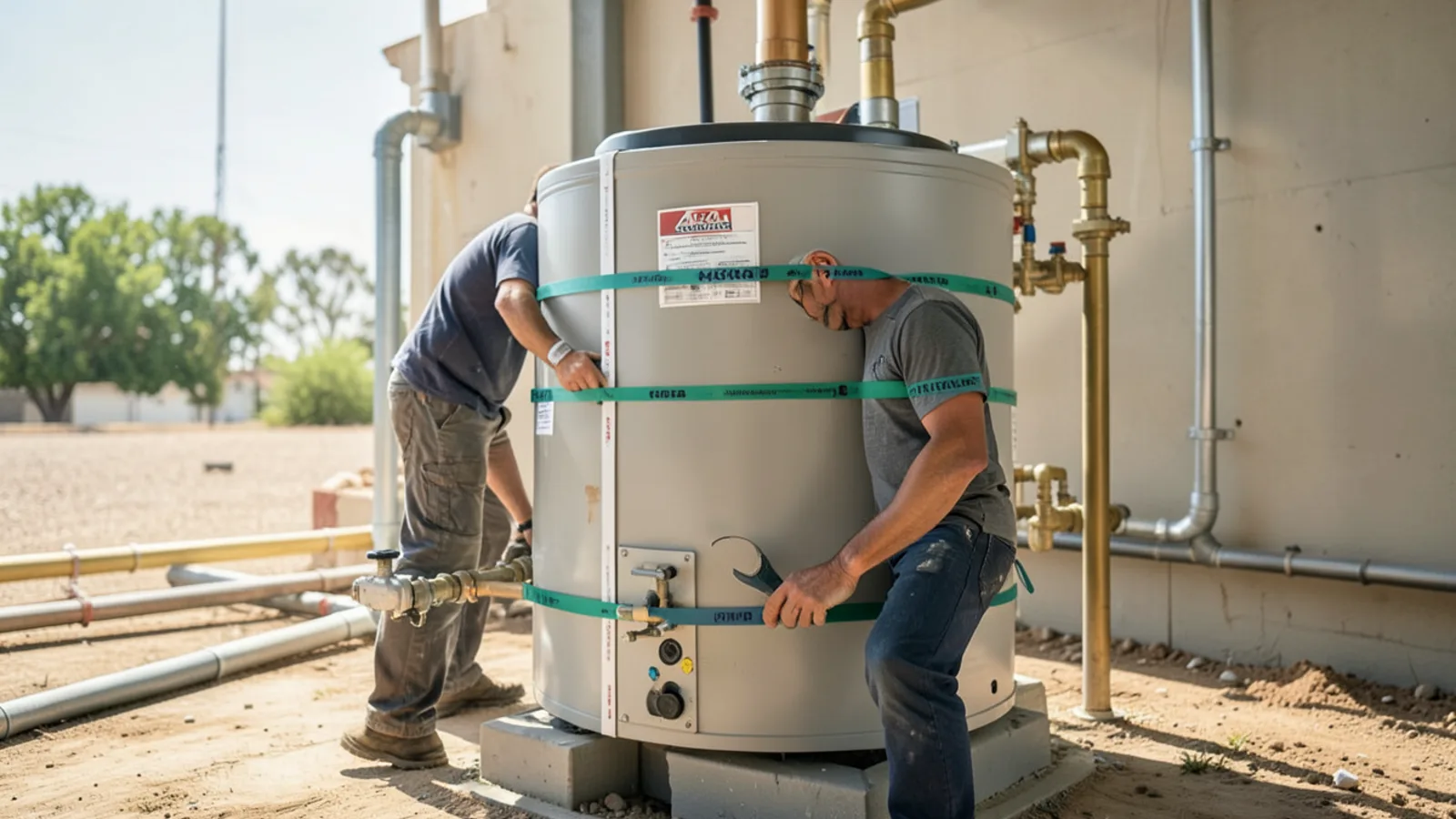
Answer first: California seismic water heater strapping mandates
Under California Health and Safety Code Section 19211 and California Plumbing Code Section 507.2, every residential storage water heater installed or operating in California must be securely braced, anchored, or strapped to resist horizontal displacement and toppling during earthquake ground shaking.To pass municipal building inspections and comply with California real estate escrow disclosure laws, your water heater installation must satisfy strict technical standards: The installation requires two certified heavy-gauge metal restraint straps wrapped around the tank circumference—single-strap kits or thin plumber perforated tape are illegal. The upper strap must be positioned within the upper one-third of the tank height, maintaining at least four inches of clearance below the draft hood and control valves. The lower strap must be positioned within the lower one-third of the tank, maintaining at least four inches of clearance above the gas burner controls. Both straps must be anchored directly into structural wall framing studs using one-quarter-inch diameter by three-inch lag screws with flat washers. Additionally, water heaters must feature flexible water and gas connectors, an ASME-rated thermal expansion tank, and a temperature-pressure relief discharge pipe routed to an approved location.
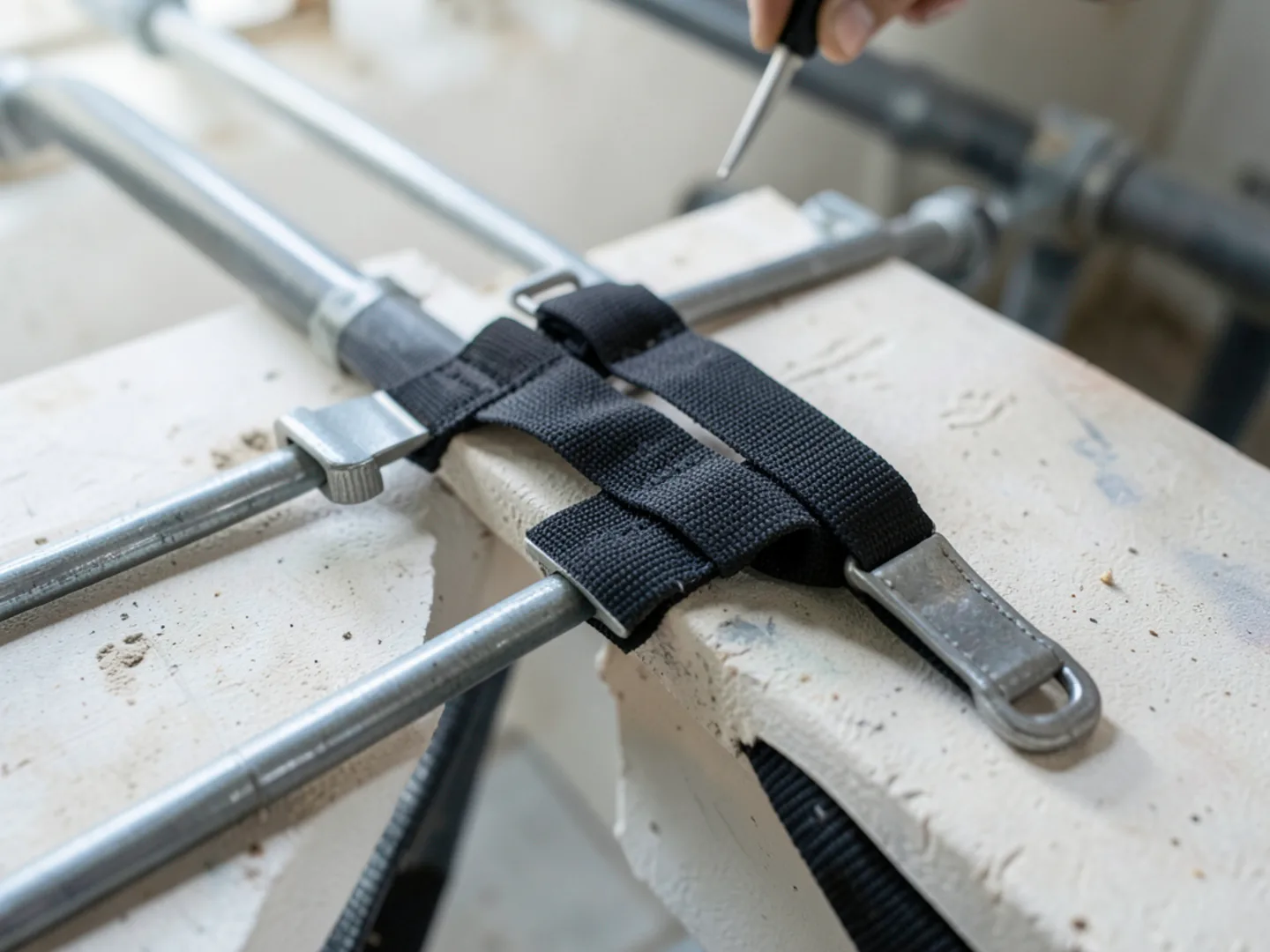
Seismic physics and the catastrophic dangers of an unbraced tank
The requirement for seismic water heater bracing is not merely a bureaucratic building regulation; it is a critical life-safety defense engineered specifically for Southern California geology. The Inland Empire is traversed by prominent, active fault systems, including the Elsinore Fault Zone running directly through Corona and the Temescal Valley, the San Jacinto Fault Zone, and the San Andreas Fault.A typical 50-gallon residential storage water heater holds approximately 417 pounds of water. When combined with the 120-pound steel tank and exterior jacket, the unit becomes a top-heavy 540-pound pendulum resting on a narrow 20-inch to 22-inch circular base. During a moderate to severe seismic event, ground accelerations create intense lateral shear forces that cause unanchored tanks to walk across garage floors, tip over, and crash onto finished floors.A toppling water heater triggers secondary disasters: First, when a gas-fired heater falls, it tears rigid black iron gas piping directly out of the floor or wall. High-pressure natural gas discharges into the home or garage, where electrical sparks from appliances or the open pilot flame ignite devastating structure fires. Second, snapped domestic water pipes release hundreds of gallons of scalding water within minutes, causing severe flooding. Third, a water heater represents the largest emergency reservoir of clean drinking water in most homes during a major natural disaster; if the tank ruptures on the floor, that critical survival supply is lost.
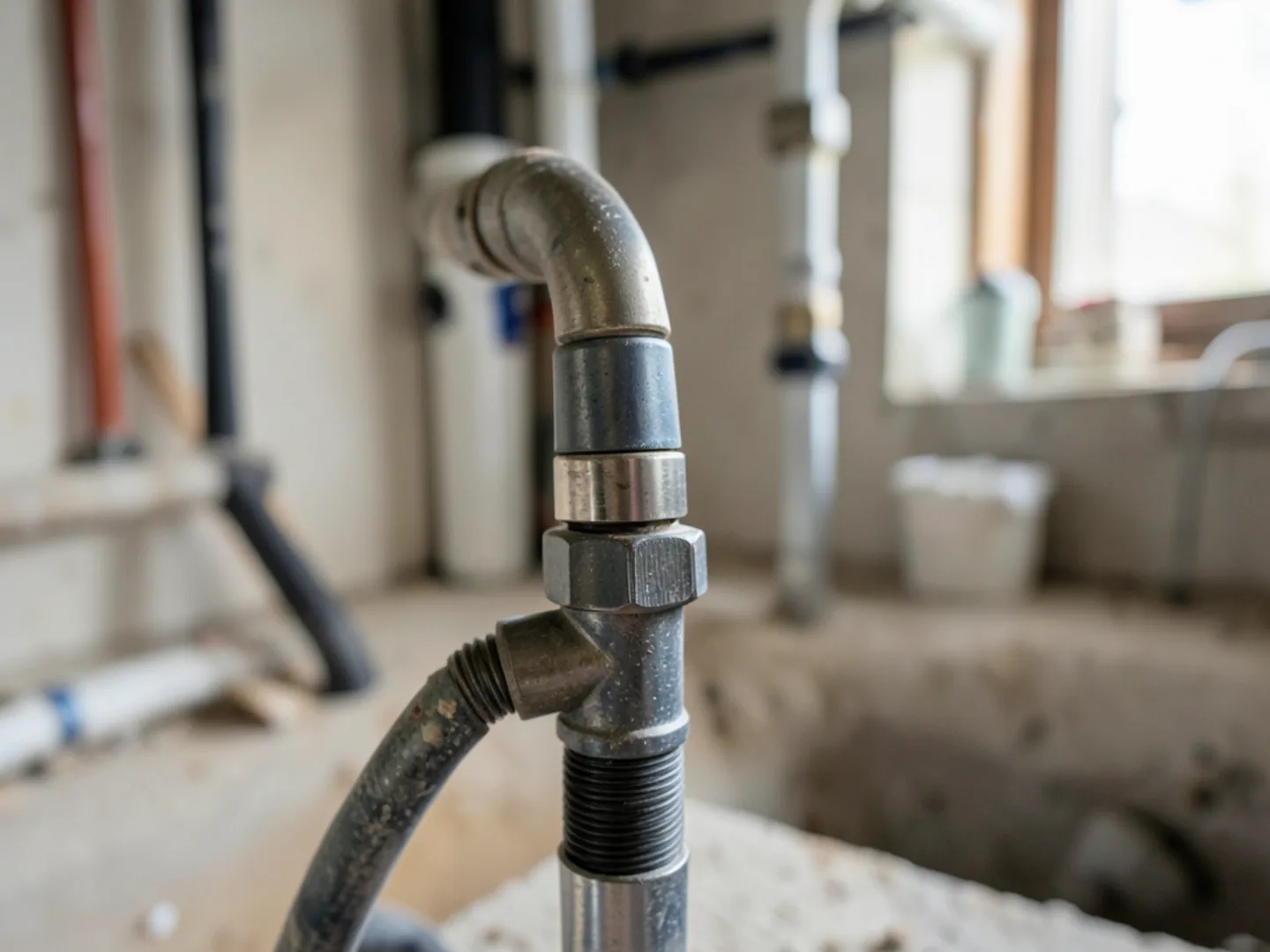
Exact strapping positioning, heights, and stud anchoring rules
To satisfy City of Corona Community Development Department inspectors, seismic restraint kits must be installed in strict adherence to state geometric guidelines:• Upper Strap Location: The upper metal strap must wrap completely around the circumference within the top one-third of the tank cylinder height. Installers must maintain a minimum of four inches of clear space below the draft hood and flue pipe to prevent strap heat damage, and four inches of clearance above water inlet connections.• Lower Strap Location: The lower metal strap must wrap within the bottom one-third of the tank cylinder height. To allow unrestricted technician access during servicing, the strap must maintain a minimum four-inch clearance above the thermostat and gas control valve assembly, as well as the pilot view window.• Stud Anchoring Hardware: Restraint straps must never be secured to drywall, plaster, or stucco alone. Each strap leg must be anchored directly into the center of a two-by-four or two-by-six Douglas fir wall framing stud. The code mandates minimum one-quarter-inch diameter by three-inch-long steel lag screws. Installers must drill three-sixteenths-inch pilot holes to prevent splitting the wooden framing stud, and place one-quarter-inch heavy steel flat washers between the screw head and the strap to prevent the bolt from tearing through the metal strap slot under seismic tension.• Solid Wood Backing Blocks: If a water heater sits more than one to two inches away from the wall framing—common in garages with concrete perimeter foundation curbs—installing straps directly to studs creates loose slack that allows the tank to rotate. In these scenarios, installers must lag solid two-by-four timber blocking horizontally across two wall studs. The tank is then cinched tight against this rigid wooden backing block.
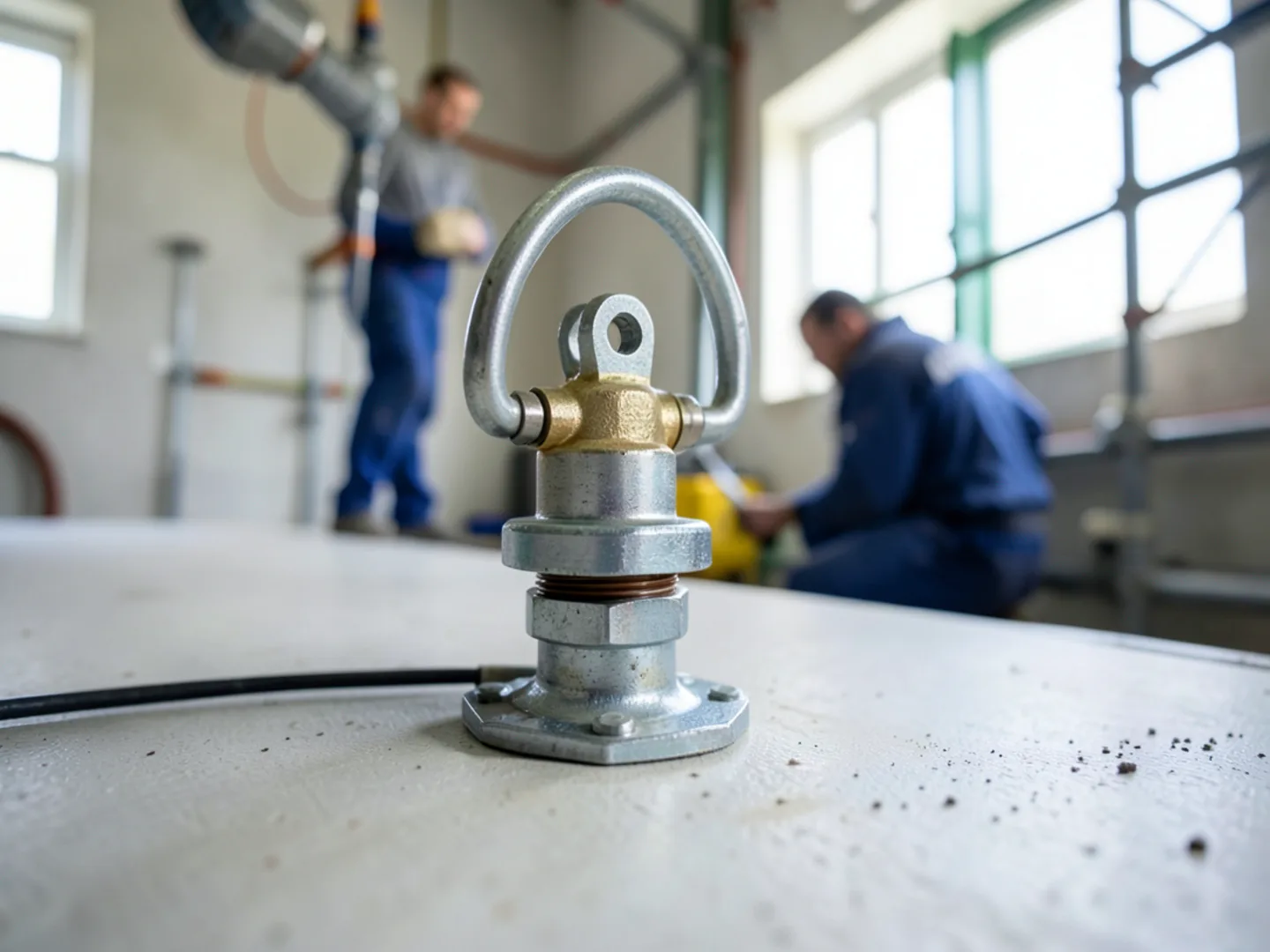
Mandatory flexible connectors and thermal expansion requirements
Seismic safety extends beyond metal bands; the connecting utility piping must be engineered to flex independently without snapping when building framing shifts:• Corrugated Water Supply Connectors: Under California Plumbing Code Section 604.13, rigid copper piping soldered directly to water heater inlet and outlet nipples is non-compliant. Installers must use approved corrugated stainless steel or flexible copper connectors measuring between eighteen and twenty-four inches in length. These corrugated conduits flex during ground tremors, absorbing structural movement without shearing pipe joints.• Flexible Natural Gas Connectors: Gas water heaters must be connected using a CSA-certified corrugated stainless steel gas appliance connector compliant with ANSI Z21.24. A dedicated full-port brass quarter-turn manual gas shutoff valve must be installed on the rigid gas supply pipe immediately upstream of the flexible connector.• Thermal Expansion Tanks: Under California Plumbing Code Section 608.3, any residence equipped with a closed plumbing system—such as homes with municipal backflow preventers, check valves, or pressure reducing valves common throughout Corona—must have a pre-pressurized diaphragm thermal expansion tank installed on the cold water supply line. When water heats up, it expands by approximately two percent; without an expansion tank, hydraulic pressure spikes beyond 120 PSI, damaging fixture cartridges and blowing open safety relief valves. The expansion tank must be supported with its own independent seismic mounting bracket.• Temperature-Pressure Relief (TPR) Discharge: The safety relief valve must have a full-size copper or CPVC discharge pipe running downward by gravity, terminating between six and twenty-four inches above the floor with an unthreaded end.
Comprehensive California water heater inspection checklist
Homeowners preparing for a municipal building inspection or real estate transaction should verify their installation against this comprehensive compliance checklist:1. Dual Strap Verification: Two heavy-gauge galvanized steel straps installed (upper 1/3 and lower 1/3 of tank).2. Approved Hardware: Heavy 1/4-inch by 3-inch lag screws secured into solid wall studs with flat washers.3. Rigid Wood Blocking: Solid 2x4 lumber backing installed if wall clearance exceeds two inches.4. Flexible Water Lines: 18-inch to 24-inch corrugated stainless steel water supply lines installed.5. Flexible Gas Line: Certified corrugated stainless steel gas line with manual brass shutoff valve.6. Thermal Expansion Tank: Pre-pressurized expansion tank installed on cold line with dedicated support bracket.7. TPR Discharge Pipe: Unthreaded copper or CPVC discharge pipe routed downhill to legal exterior termination.8. Clearance from Combustibles: Adequate manufacturer clearance maintained around draft hood and flue piping.
Real estate escrow disclosures and City of Corona building permits
Water heater seismic strapping carries significant legal and financial consequences during California property transactions. Under California Health and Safety Code Section 19211 and California Civil Code Section 1102, sellers are legally mandated to certify in writing on the Real Estate Transfer Disclosure Statement (TDS) that all water heaters on the property are braced, anchored, or strapped in accordance with state code.Professional home inspectors and escrow appraisers examine water heaters closely. An unstrapped tank, single-strap installation, or perforated plumber tape will immediately be flagged on inspection reports, frequently delaying loan funding or requiring emergency plumber repairs prior to closing.Furthermore, the City of Corona Community Development Department requires a formal building permit for all residential water heater replacements. When our technicians install a water heater, we pull the official permit, complete the double strapping and expansion tank setup to code, and schedule the municipal inspector sign-off, protecting your property value and insurance coverage.
Seismic regulations for tankless water heaters in Inland Empire homes
Homeowners switching from traditional storage tanks to high-efficiency tankless water heaters frequently inquire whether seismic strapping rules apply to tankless models.Because tankless water heaters do not store 400 pounds of water, they do not utilize circular wrap-around metal strap kits. However, they remain subject to stringent seismic mounting standards under the California Mechanical Code and California Plumbing Code. A tankless unit must be bolted securely to structural wall framing using heavy-gauge factory steel mounting brackets anchored with minimum 5/16-inch lag screws into two separate two-by-four wall studs.If wall studs are not spaced appropriately, technicians must install 3/4-inch exterior-grade plywood or steel unistrut backing plates secured across the studs to anchor the unit. Tankless installations also require certified flexible gas and water connectors and an accessible gas shutoff valve to prevent joint rupture during earthquake movement. For professional water heater strapping, inspections, or replacements in Corona, call our licensed plumbing desk at (207) 419-2600.
Need professional diagnostics or repairs in Corona?
Our technicians are stationed at 685 E Grand Blvd in Corona. Learn more about our complete plumber in Corona CA capabilities, or call our direct phone line at (207) 419-2600.