
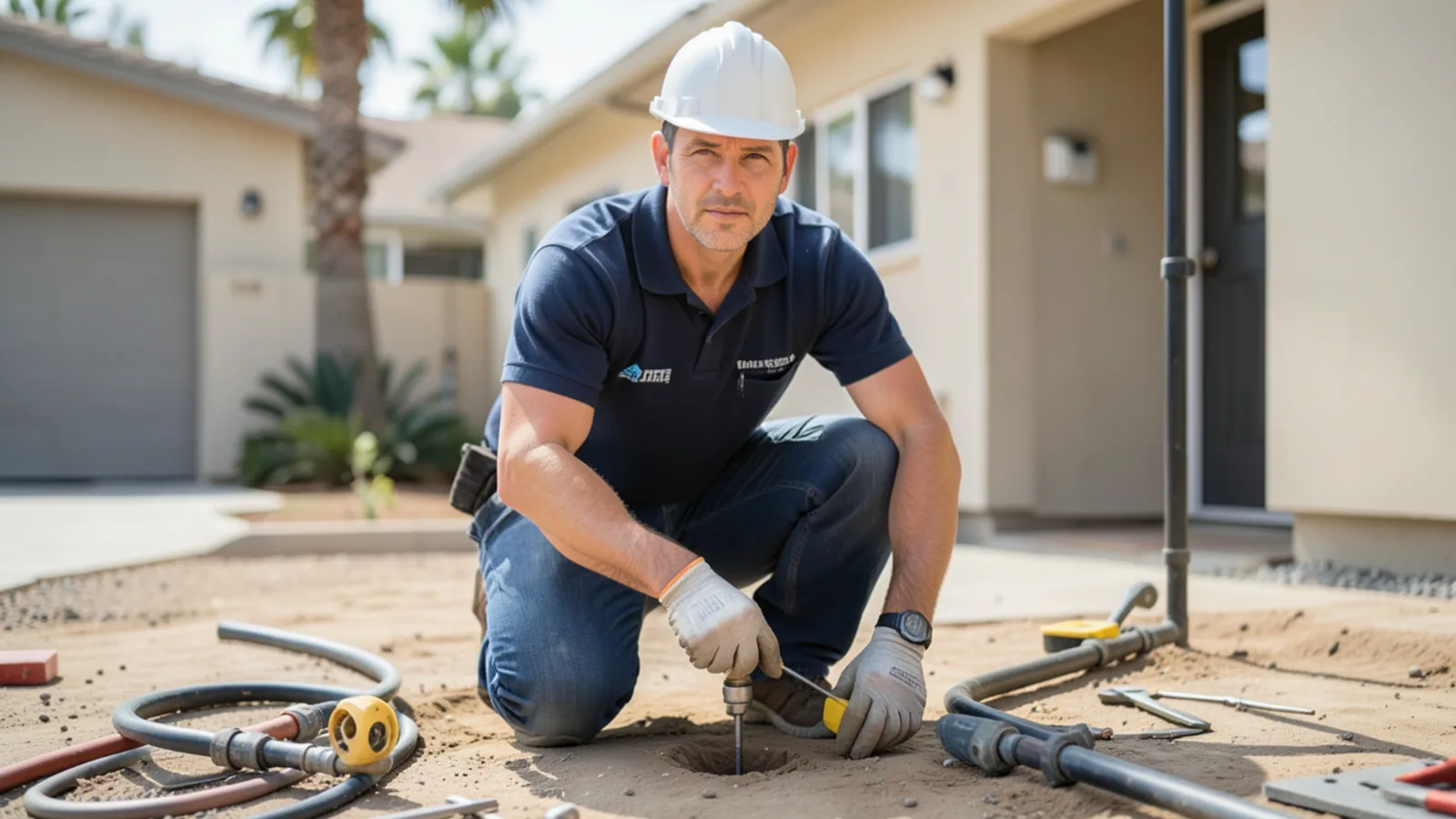
What our gas line installation and repair service includes
Natural gas line installations require exacting volumetric engineering, licensed craftsmanship, and rigorous safety testing. Operating from 685 E Grand Blvd, our licensed C-36 contractors design, permit, and install certified fuel gas systems for residential and commercial properties across Corona. Every gas service project includes: (1) Total connected load British Thermal Unit (BTU) calculations and pipe sizing; (2) SoCalGas meter manifold capacity evaluation; (3) Installation of rigid Schedule 40 black steel pipe with heavy malleable iron fittings; (4) Subterranean medium-density polyethylene (MDPE) piping with heat-fusion joints and anodeless steel risers; (5) Corrugated stainless steel tubing (CSST) installation with arc-resistant conductive jackets; (6) Automatic seismic earthquake shutoff valve integration; (7) High-pressure pneumatic decay hold testing using calibrated inspection gauges; (8) Complete City of Corona Building Division eTRAKiT permitting, utility coordination, and municipal inspection signoff.
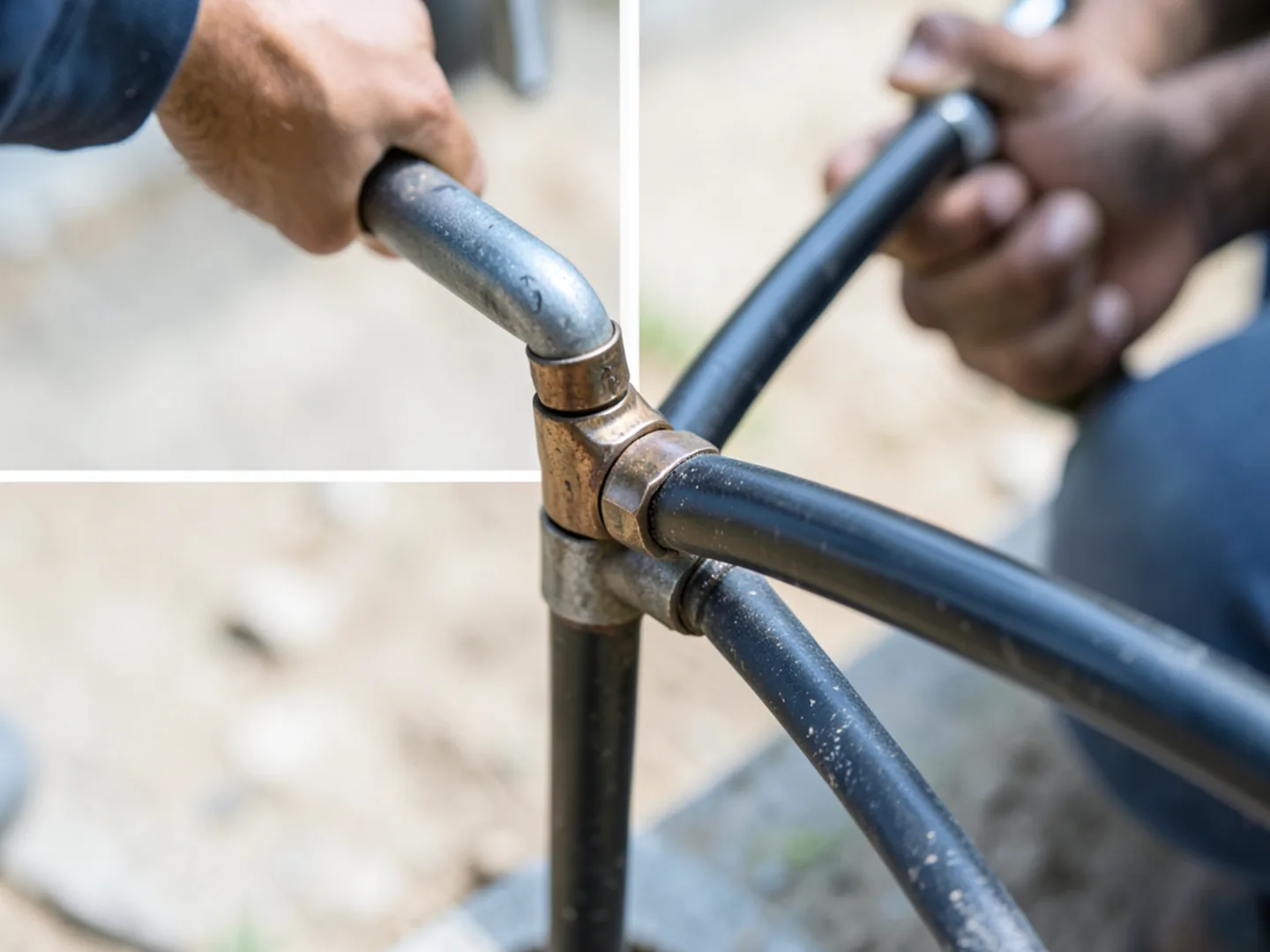
Planning and sizing natural gas piping systems in Corona
Natural gas delivery is governed by strict fluid dynamics: because gas enters residential meters at low pressure (typically 7 to 9 inches water column, or roughly one-third of a single PSI), pipe diameter directly dictates fuel delivery volume. Adding high-demand appliances—such as converting from an atmospheric water heater to a 199,000 BTU tankless unit, installing a 400,000 BTU pool heater, or setting up a 100,000 BTU outdoor fire pit—can severely starve existing equipment if gas lines are undersized. Starved appliances suffer from unstable yellow flames, carbon buildup, soot deposition, and elevated carbon monoxide generation. Our technicians calculate total equivalent pipe length (factoring in pressure drops through elbows, valves, and tees) per California Plumbing Code Chapter 12 demand charts, upsizing lines to 1-inch or 1-1/4-inch to ensure adequate volume under peak winter heating loads.
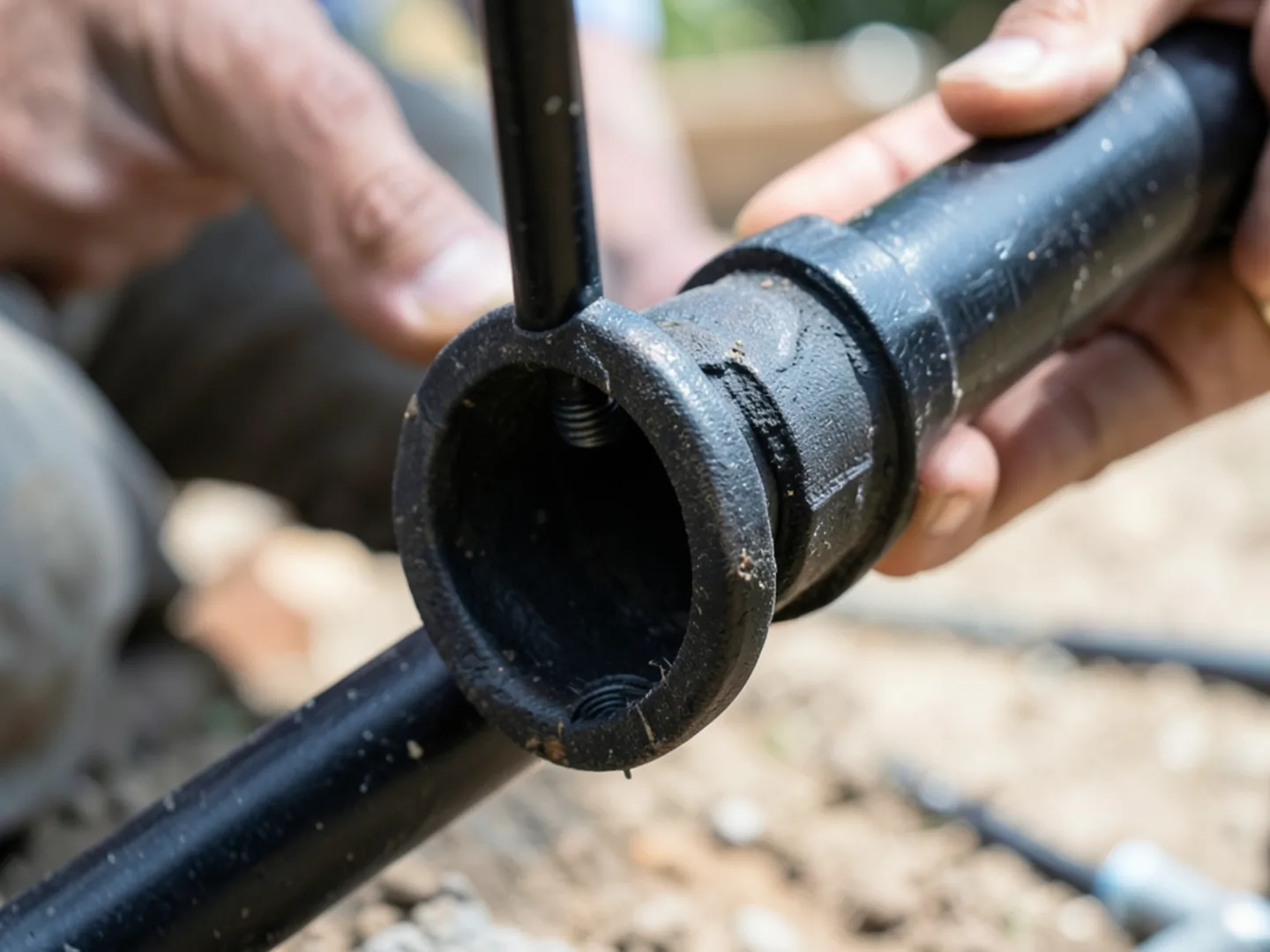
Approved gas piping materials for indoor and underground installations
Selecting the proper piping material ensures safety and long-term durability: For interior exposed and framed runs, we install heavy-gauge Schedule 40 black steel pipe, cut and threaded with portable power tools and sealed with gas-rated yellow PTFE tape and anaerobic pipe compound. Where flexible routing is required through floor joists or finished wall bays, we install arc-resistant corrugated stainless steel tubing (CSST) equipped with conductive poly jackets that safely dissipate electrical charges from lightning or utility faults. For underground yard installations running to outdoor kitchens, pool heaters, or patio heaters, California code strictly forbids burying bare metal pipe due to aggressive soil corrosion. Instead, we install yellow medium-density polyethylene (MDPE) gas pipe buried at a minimum depth of 18 inches. Underground plastic transitions to above-ground steel using pre-manufactured anodeless steel risers outfitted with 14-gauge insulated copper tracer wire for electronic surface locating.
Dedicated gas supply branches for high-demand outdoor living and appliances
Outdoor entertaining is a cornerstone of Inland Empire living, and our team engineers custom exterior gas distribution networks tailored to backyard living spaces: We install dedicated outdoor gas manifolds equipped with individual quarter-turn brass ball valves, allowing homeowners to isolate outdoor fire pits or barbecue grills independently from main household lines. Our crews trench clean 18-inch underground corridors, lay four inches of clean sand bedding, assemble continuous MDPE lines, install yellow underground gas warning tape six inches above the pipe, and terminate with rigid stainless steel gas drops. Every appliance drop features an individual manual gas cock and heavy-duty stainless steel flexible connector meeting ANSI Z21.24 standards.
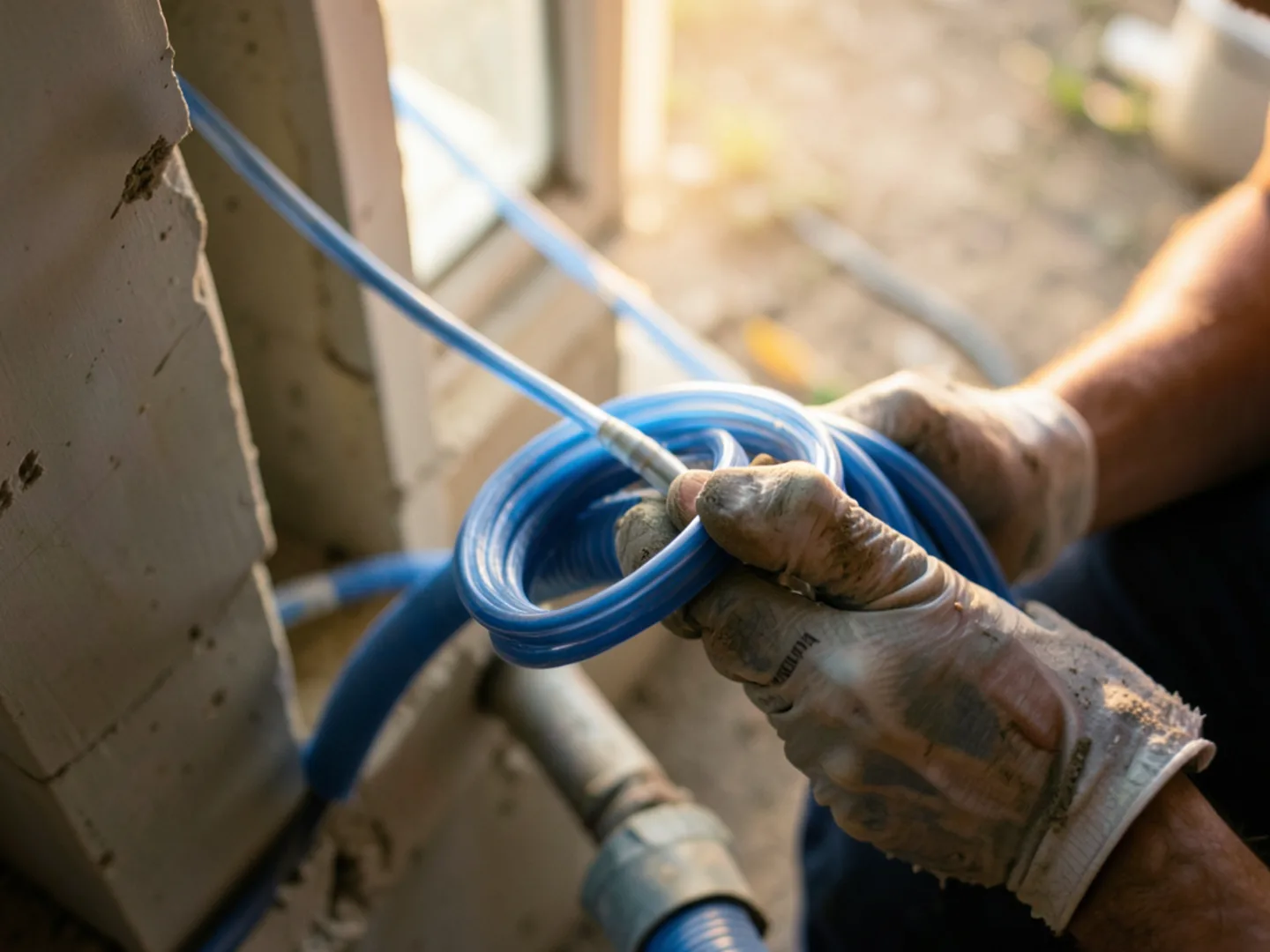
Seismic automatic earthquake shutoff valves
Western Riverside County is bordered by several major active fault zones, including the San Jacinto and Elsinore fault systems. During strong ground shaking, shifting foundations and tumbling water heaters can fracture rigid gas pipes, creating catastrophic post-earthquake fire hazards. To protect your family and property, our technicians install California State Architect-certified seismic automatic gas shutoff valves directly downstream of the SoCalGas meter. These motion-activated valves contain an internal precision stainless steel sphere held on a brass pedestal. When seismic acceleration reaches magnitude 5.4 or higher, the ball displaces instantly, snapping a spring-loaded flapper shut to stop fuel flow into your home in milliseconds.
Our five-step gas line installation and testing workflow
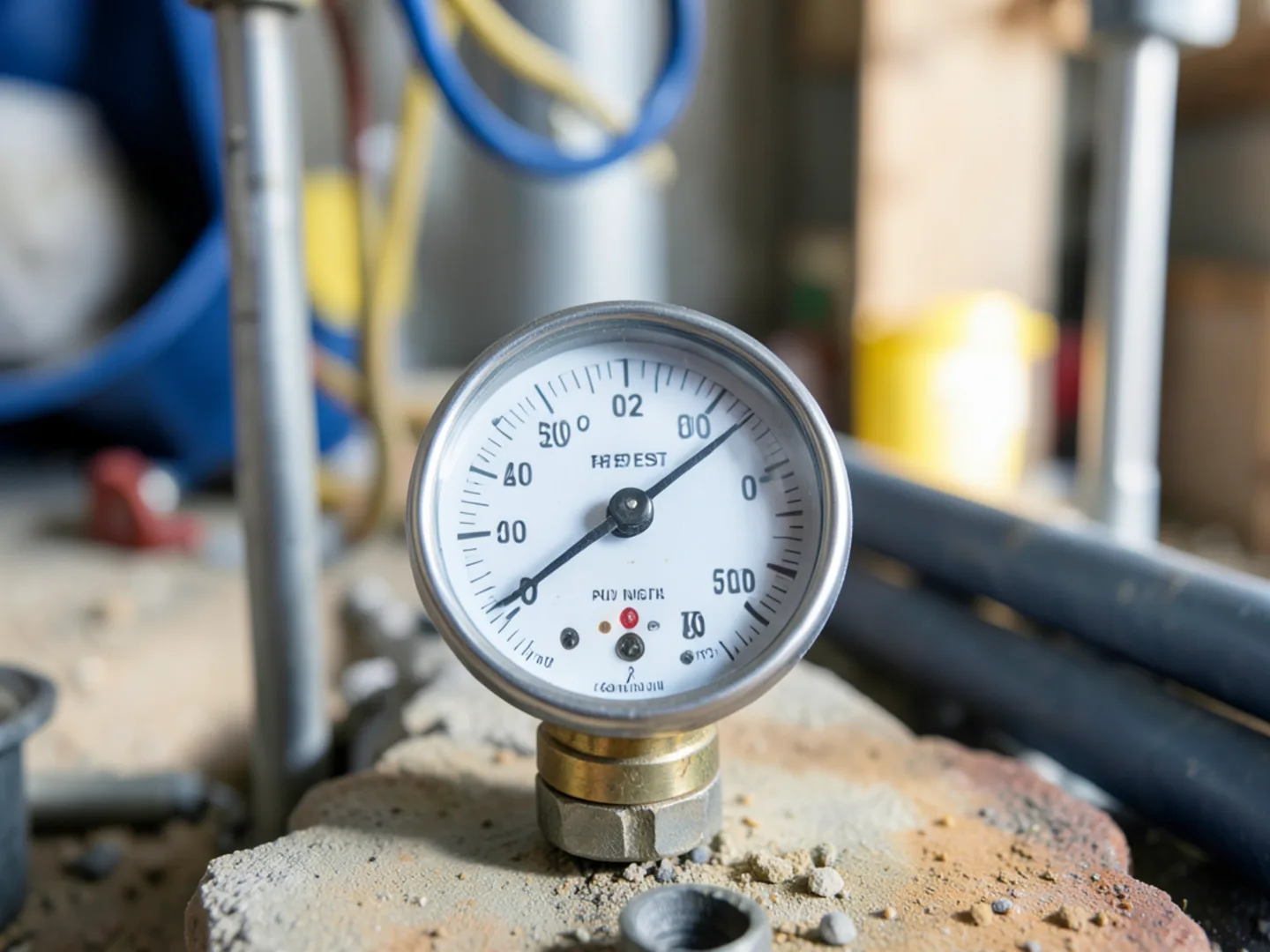
Our technicians follow a disciplined five-stage procedure on every gas piping project: Step 1: Load Calculation and Meter Sizing. We audit all existing and planned gas appliances, verifying that total connected BTUs remain within the rating on your SoCalGas meter badge (typically 250 CFH or 400 CFH), coordinating complimentary utility upgrades if needed. Step 2: Trenching, Coring, and Structural Rough-In. We excavate 18-inch trenches, core-drill foundation stem walls, and mount heavy pipe hangers spaced every six to eight feet per code. Step 3: Precision Mechanical Assembly. We thread Schedule 40 black iron pipe or fusion-weld MDPE underground tubing with anodeless transition risers. Step 4: High-Pressure Pneumatic Hold Test. We cap all appliance terminations, attach a calibrated 30-PSI diaphragm test manifold, and pump the system to 15 to 20 PSI with air—over 50 times normal operating pressure—monitoring for zero needle movement over a 15-minute test window. Step 5: City Inspection, Utility Release, and Burner Light-Off. We host the on-site City of Corona building inspector for pressure test witnessing, obtain formal permit signoff, purge air safely from lines, and test appliance manifold pressures with digital manometers.
California plumbing code standards and Corona permit inspections
All fuel gas piping installed in Corona must comply strictly with California Plumbing Code (CPC) Title 24 Part 5, Chapter 12 and NFPA 54 (National Fuel Gas Code). CPC Section 1211.7 mandates that every gas appliance must be equipped with an accessible shutoff valve located within six feet of the appliance, as well as a vertical sediment trap (dirt pocket) positioned directly upstream of the gas control valve to capture scale and condensation before it fouls internal valves. Our licensed C-36 contractors manage all required permit documentation through the City of Corona eTRAKiT portal, schedule the official pressure test inspection with municipal building officials, and deliver signed documentation to SoCalGas to ensure prompt meter activation.
Specialized gas piping tools carried on our mobile service fleet
Working safely with combustible fuel lines requires industrial equipment. Our mobile service trucks dispatched from 685 E Grand Blvd carry Ridgid compact electric power pipe threaders, heavy pipe vises, and calibrated 30-PSI mechanical pressure test manifolds. We utilize Dwyer digital differential manometers to measure gas delivery pressures in tenths of an inch of water column, along with high-sensitivity combustible gas sniffers capable of detecting methane concentrations as low as 10 parts per million. Having complete inventories of Schedule 40 black pipe, malleable iron fittings, and MDPE tubing on board allows us to complete gas installations cleanly and efficiently.
Need plumbing service in Corona or surrounding communities?
Our central dispatch is stationed on East Grand Boulevard. Whether you are dealing with an urgent leak in South Corona, need sewer diagnostics in Norco, or require water heater replacement in Eastvale, our licensed technicians arrive prepared with complete equipment rigs. Read more about our overall plumber in Corona CA services, or contact our shop at (207) 419-2600.