

Answer first: the critical indicators of an active slab leak
An active slab leak occurs when a pressurized domestic water supply line ruptures or develops a pinhole perforation underneath a poured concrete foundation. If you suspect a leak under your slab in Corona, five primary physical symptoms confirm the problem: a localized warm or hot section on your ground floor, a municipal water meter leak indicator that continues spinning when every faucet is closed, faint hissing or rushing water sounds behind baseboards during quiet hours, damp baseboards or buckling floorboards, and a sudden unexplained spike on your monthly municipal water utility statement.Because concrete foundation slabs in the Inland Empire are poured directly over sub-base sand, crushed aggregate, and native alluvial clay, escaping water rarely shoots straight up into your living room immediately. Instead, pressurized water disperses horizontally through the sub-base, slowly saturating soil and undermining the structural support of your foundation. Left unchecked, a continuous 65 PSI pinhole leak releases between 50 and 250 gallons of water into the ground every single day. If you observe any of these warning signs, isolate your main water supply and call our Corona dispatch desk at (207) 419-2600 for same-day acoustic leak locating.
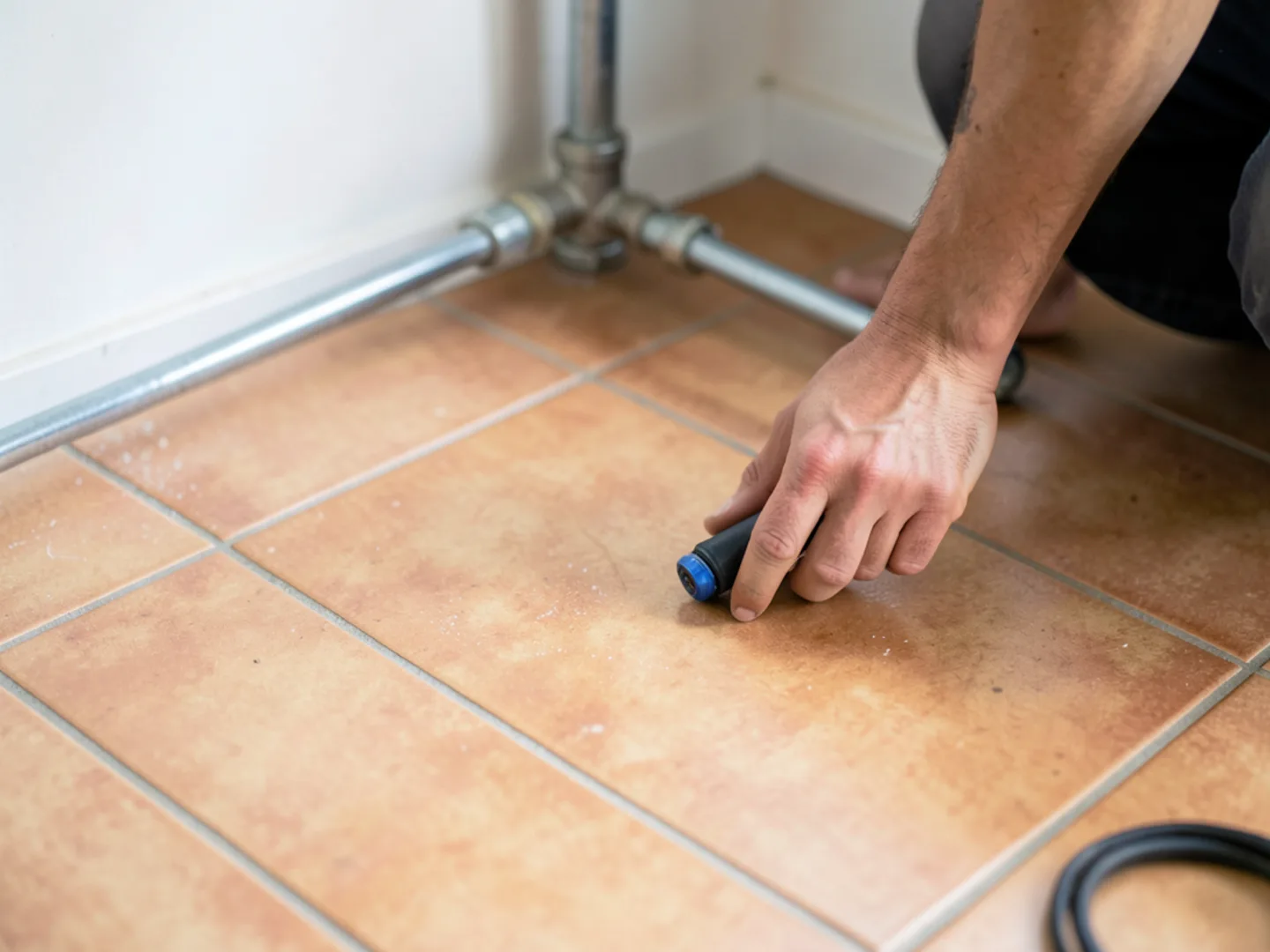
Unexplained floor warmth and hot water line breaches
In suburban master-planned communities built throughout Corona between 1975 and 2005—including Sierra del Oro, Mountain Gate, South Corona, and Corona Hills—builders routinely routed hot and cold potable water lines directly through the soil beneath monolithic concrete slabs. Approximately eighty percent of under-slab pipe breaches occur on the hot water lines rather than cold water circuits.This high failure rate results from continuous thermal expansion and contraction. Whenever a hot water fixture is activated, 120-degree to 130-degree water flows through the soft Type M copper tubing, causing the metal to expand lengthwise. When the water cools down, the pipe contracts. Over fifteen to thirty years, this micro-movement causes the outer wall of the copper pipe to rub against coarse aggregate bedding rocks or sharp gravel beneath the foundation. Eventually, mechanical friction wears a paper-thin spot through the copper, resulting in an active pinhole leak.When pressurized hot water escapes under your slab, heat radiates directly upward through the concrete. Homeowners walking barefoot or in socks suddenly notice a specific tile, vinyl plank, or hardwood section that feels like an operating radiant heating floor. In many cases, your domestic water heater will also run continuously or cycle frequently even when no hot water is in demand, because hot water is constantly discharging into the ground.
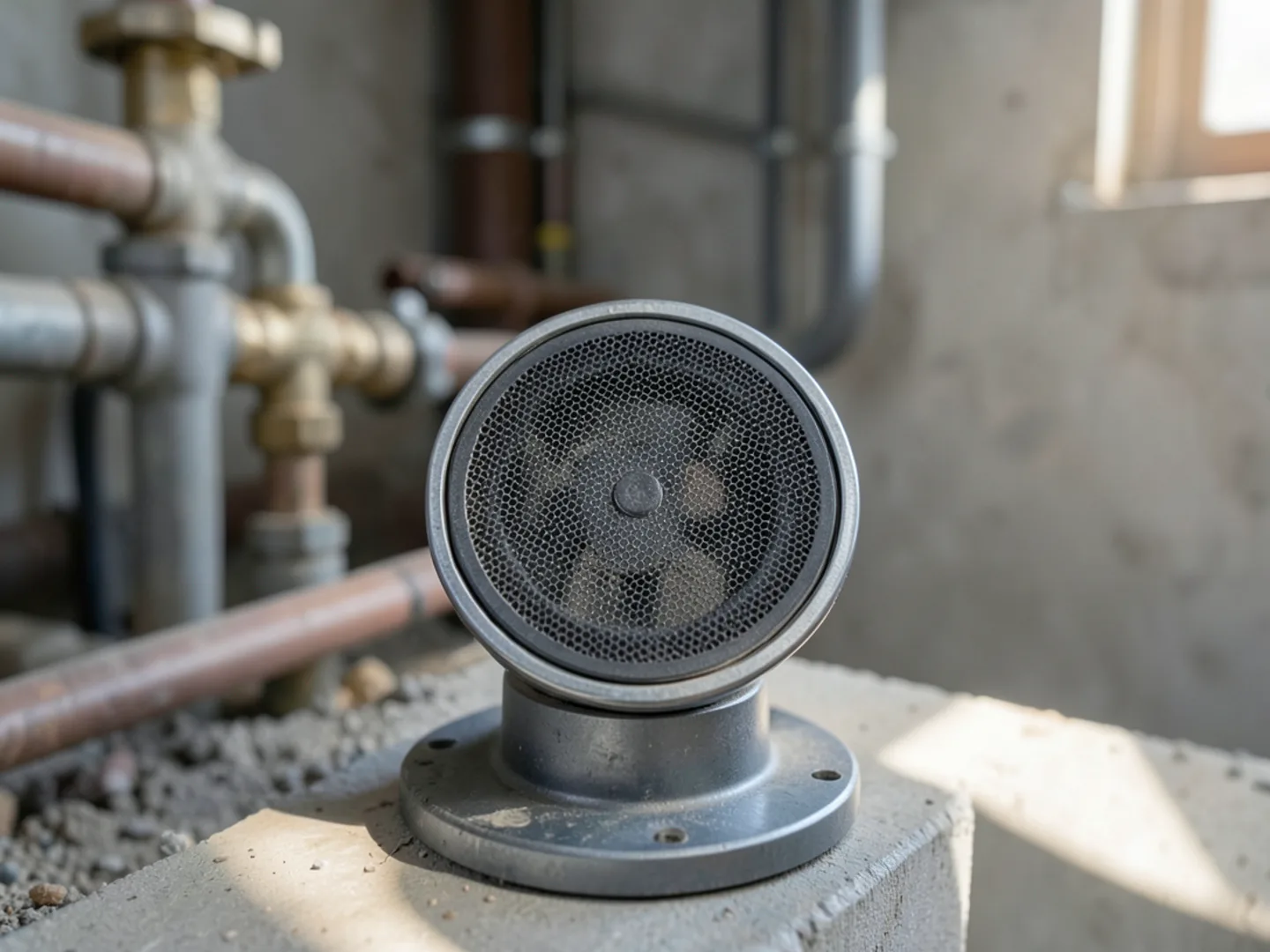
Testing your municipal water meter to verify continuous flow
Your municipal water meter is the most reliable diagnostic instrument available for verifying whether pressurized water is actively escaping from your plumbing system. In Corona, meters are positioned in cast concrete utility boxes near the street curb or sidewalk, operated by the City of Corona Department of Water and Power (DWP) or the Eastern Municipal Water District (EMWD).To conduct an accurate meter leak test, follow this systematic procedure:First, verify that every water-consuming fixture inside and outside your residence is completely shut down. Turn off all sink faucets, ensure washing machines and dishwashers are not running, and confirm that landscape irrigation timers are disabled. Additionally, check that toilet fill valves are seated properly and not trickling water down the overflow tube.Second, open the street meter box using a screwdriver or curb key and wipe the dial glass clean. Inspect the dial face for the low-flow leak indicator. On mechanical meters, this appears as a small red triangle, blue star, or miniature toothed gear that rotates independently of the main gallon sweep hand. On newer digital electronic registers, observe the digital flow rate indicator or flashing faucet icon. If this dial spins continuously or registers flow while all fixtures are off, water is leaving your municipal supply.Third, perform an isolation check. Locate your private main shutoff ball valve on the exterior front riser near the hose bib and turn it off completely. If the meter stops spinning, the leak is located inside the home underneath your slab. If the meter continues to spin with the house shutoff closed, the leak is situated on the exterior underground supply lateral between the meter and your home.
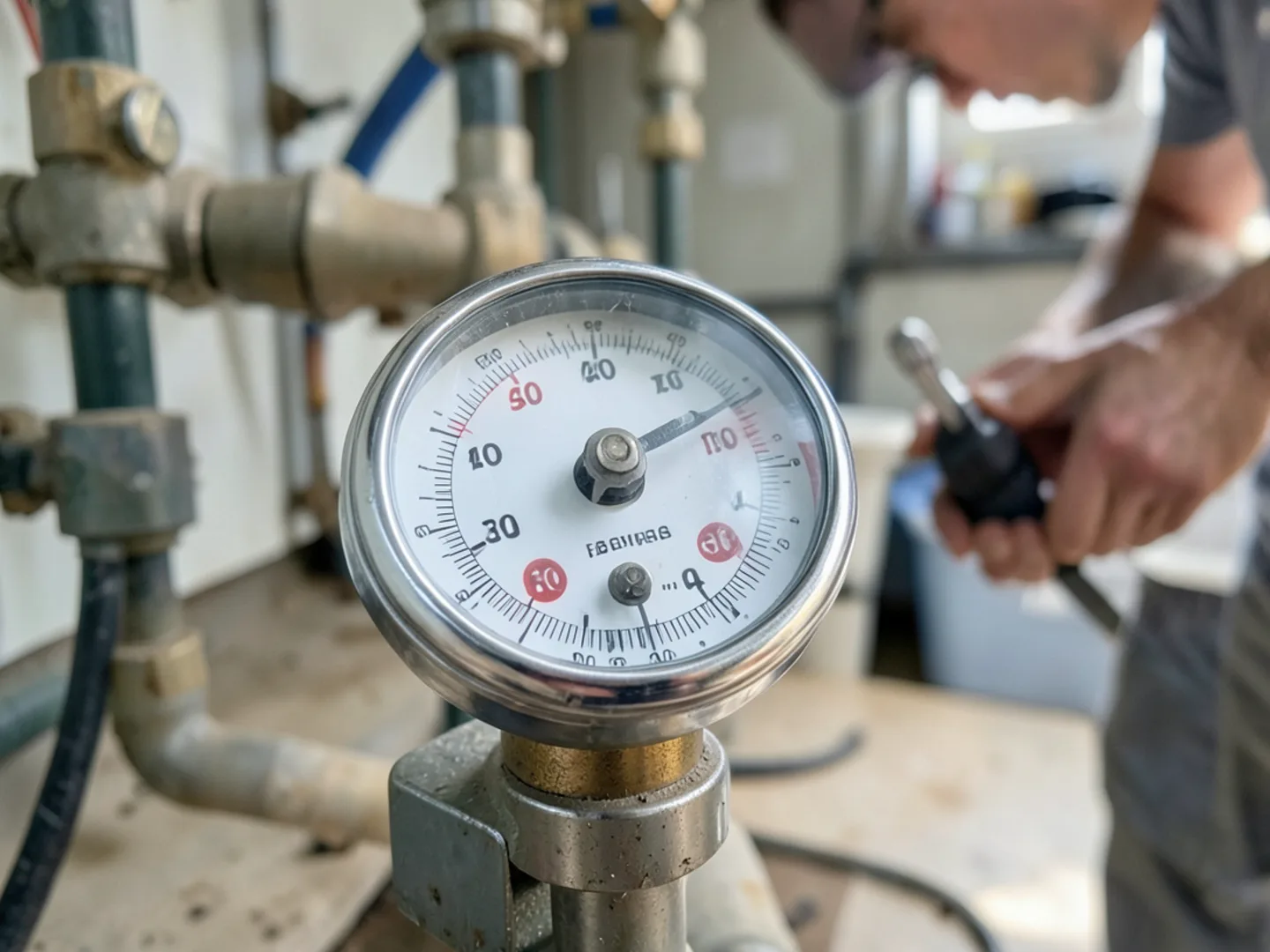
Audible water flow, pressure drops, and phantom sounds
A high-velocity stream of water escaping through a small fracture in a metal pipe produces a distinct high-frequency vibration known to plumbers as pipe hiss. In a single-story ranch home or on the ground floor of a multi-story home, this sound travels readily through copper piping manifolds and resonates into nearby wall framing.During late evening or early morning hours when ambient household noise drops to silence, homeowners often hear what sounds like a toilet tank quietly refilling, a bathroom exhaust fan running, or distant rushing water. When you listen closely near baseboards, hallway linen closets, or laundry utility rooms, the sound remains constant and unvarying.Concurrently, you may notice a subtle but persistent drop in domestic water delivery pressure. When a pinhole breach reaches one-eighth of an inch in diameter, it bleeds off hydraulic pressure from the entire branch circuit. If taking a shower in the master bathroom causes water volume in the kitchen sink to drop dramatically, or if outdoor hose bibs spray with reduced velocity, an active sub-slab fissure is venting system pressure directly into the foundation soil.
Moisture migration, buckling flooring, and drywall damage
Water that escapes beneath a concrete foundation cannot remain trapped in the ground indefinitely. Over several days or weeks, the sub-slab gravel bed reaches hydrostatic saturation. Once the ground can absorb no further volume, water seeks the path of least resistance, forcing its way upward through foundation expansion seams, plumbing penetrations, and microscopic concrete pores.Floor coverings exhibit immediate physical reactions to rising sub-slab moisture. Engineered hardwood boards absorb dampness from the underside, causing the edges to swell higher than the centers in a condition known as cupping. In luxury vinyl plank (LVP) or sheet vinyl flooring, trapped vapor breaks down adhesive bonds, causing visible bubbles, soft spongy spots, or seam separation. On ceramic or porcelain tile floors, moisture dissolves mineral salts from the concrete and mortar bed, pushing white powdery residue through the grout lines in a phenomenon called efflorescence.As moisture migrates to perimeter and partition walls, wooden sill plates and the bottom edge of gypsum drywall absorb the water. Homeowners notice baseboards pulling away from the wall, paint peeling or bubbling, and dark damp staining spreading upward several inches from the floorline. Detecting these indicators early prevents secondary structural framing decay and hazardous indoor mold amplification.
Diagnostic checklist for Corona homeowners
If you suspect an active under-slab water failure, working through this diagnostic checklist helps you systematically document symptoms before contacting a licensed plumbing contractor:1. Physical floor check: Walk barefoot across all ground-floor tile, stone, vinyl, and wood floors to identify isolated warm zones or spongy sections.2. Visual baseboard audit: Inspect interior walls near bathrooms, kitchens, and laundry closets for paint bubbling, dark moisture stains, or warped baseboards.3. Meter rotation test: Shut off all household water fixtures and check the low-flow dial on your curb meter box to verify continuous movement.4. Water heater cycle check: Listen to your water heater to confirm whether the gas burner or electric element is firing constantly without fixture use.5. Utility bill comparison: Review your last three water utility statements to check for sudden consumption surges measured in hundred cubic feet (HCF).6. Professional acoustic detection: Call (207) 419-2600 to dispatch a licensed technician equipped with ultrasonic listening equipment to isolate the leak location.
Professional electronic detection vs breaking concrete
In previous decades, locating a slab leak required extensive exploratory demolition, forcing plumbers to break apart finished flooring and chip through concrete with jackhammers based on rough guesswork. Modern diagnostic plumbing has rendered invasive floor destruction obsolete.Our service technicians deploy advanced non-invasive diagnostic equipment to pinpoint sub-slab breaches with scientific precision before touching a tool to your floor. We use electro-acoustic listening discs equipped with ground microphones that amplify the sound of pressurized water escaping through soil. We cross-reference acoustic data with high-resolution FLIR thermal imaging cameras that visually map underground hot water plumes through concrete slabs.Once the leak is pinpointed, our team outlines your permanent repair options. Rather than jackhammering through expensive interior flooring—which creates airborne concrete dust and leaves vulnerable old copper lines beneath your home—we typically recommend an overhead Uponor ProPEX PEX-a attic reroute. An overhead bypass abandons the leaking sub-slab line entirely, replacing it with durable, flexible, corrosion-proof PEX tubing routed through your attic and down through interior wall cavities. This approach restores full water volume while protecting your architectural finishes and providing lasting peace of mind.
Need professional diagnostics or repairs in Corona?
Our technicians are stationed at 685 E Grand Blvd in Corona. Learn more about our complete plumber in Corona CA capabilities, or call our direct phone line at (207) 419-2600.