Answer first: how hard is Corona water and how does it damage plumbing
Municipal tap water delivered across Corona by the City of Corona Department of Water and Power (DWP) carries significant mineral hardness, consistently testing between 12 and 22 grains per gallon (GPG), equivalent to 205 to 376 parts per million of dissolved minerals. According to established water quality standards from the United States Geological Survey and the Water Quality Association, any water testing above 10.5 GPG is classified as very hard.This elevated hardness level causes widespread structural and mechanical damage across residential plumbing systems. When hard water is heated above 120 degrees Fahrenheit inside water heaters, dissolved calcium and magnesium precipitate out of solution, forming dense layers of rock-like calcium carbonate scale. This sediment insulates water heater burner bases, leading to overheating, loud rumbling sounds, and premature tank failure within six to eight years. Throughout your home, limescale encrusts showerhead nozzles, clogs faucet aerators, causes toilet flappers to leak, and freezes the ceramic cartridges inside shower valves. Property owners can halt mineral damage by installing whole-home ion-exchange water softeners, scheduling annual water heater flushes, and utilizing dedicated reverse osmosis systems for drinking water.
The hydrogeology behind Corona tap water hardness
The hardness of Corona tap water is directly tied to the regional geological hydrology of the Inland Empire. The City of Corona supplies drinking water from a strategic combination of local groundwater and imported surface water.Approximately half of Corona water is pumped from 22 deep municipal wells drawing from the Temescal Groundwater Basin and the Chino Groundwater Basin. Over thousands of years, rainwater percolates down from the Santa Ana Mountains and San Gabriel Mountains through thick alluvial deposits composed of limestone, dolomite, and calcium-rich granite. As groundwater filters through these mineral-dense rock strata, it naturally dissolves substantial concentrations of calcium bicarbonate, magnesium sulfate, and silica.The remaining municipal supply is imported through the Metropolitan Water District of Southern California, sourced from the Colorado River Aqueduct and the State Water Project, and treated at the Lester Water Treatment Plant. Colorado River water flows across hundreds of miles of limestone riverbeds, adding its own heavy mineral burden. Total dissolved solids (TDS) in Corona municipal water regularly measure between 350 and 650 parts per million. While entirely safe to drink and compliant with California Primary Drinking Water Standards, this mineral density is exceptionally aggressive toward plumbing infrastructure.
Thermal precipitation and water heater failure mechanisms
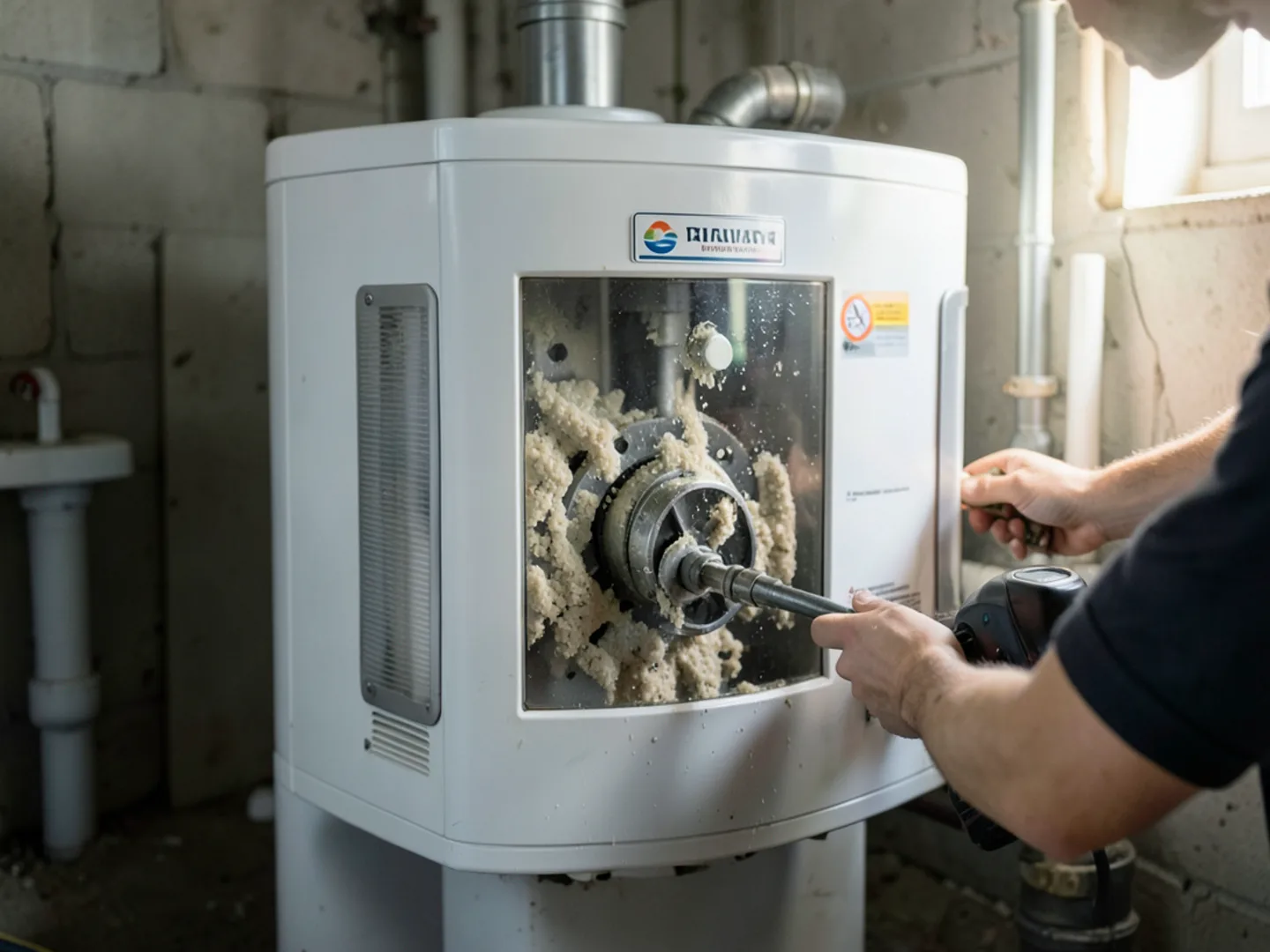
The most severe plumbing damage from hard water occurs inside residential water heating appliances due to chemical thermodynamics. In cold municipal water, calcium bicarbonate remains fully dissolved in solution. However, when water passes through a water heater and its temperature rises past 120 degrees Fahrenheit, the heat causes a chemical reaction that forces calcium bicarbonate to break down into insoluble solid calcium carbonate (calcite scale), carbon dioxide, and water.In a standard 50-gallon gas or electric storage water heater in Corona, between fifteen and twenty-five pounds of solid calcium sediment drops to the tank bottom each year. In gas-fired water heaters, this sediment forms a dense thermal insulating barrier between the steel tank bottom and the 40,000 BTU gas burner flame. Instead of heat transferring directly into the water, heat is trapped in the steel plate. The base of the tank reaches extreme temperatures over 400 degrees Fahrenheit, causing the steel to weaken, flex, and repeatedly crack its protective interior porcelain glass lining.Homeowners frequently hear loud popping, knocking, or kettling noises coming from the garage as trapped moisture boils beneath the rock layer. Eventually, the fatigued steel bottom ruptures, resulting in catastrophic basement or garage flooding. In high-efficiency tankless water heaters (such as Navien or Rinnai units), hard water scale precipitates inside micro-channel copper heat exchangers. A scale layer as thin as one-sixteenth of an inch reduces heat transfer efficiency by over twenty percent, causing error codes, overheating shutdowns, and premature heat exchanger burnout.
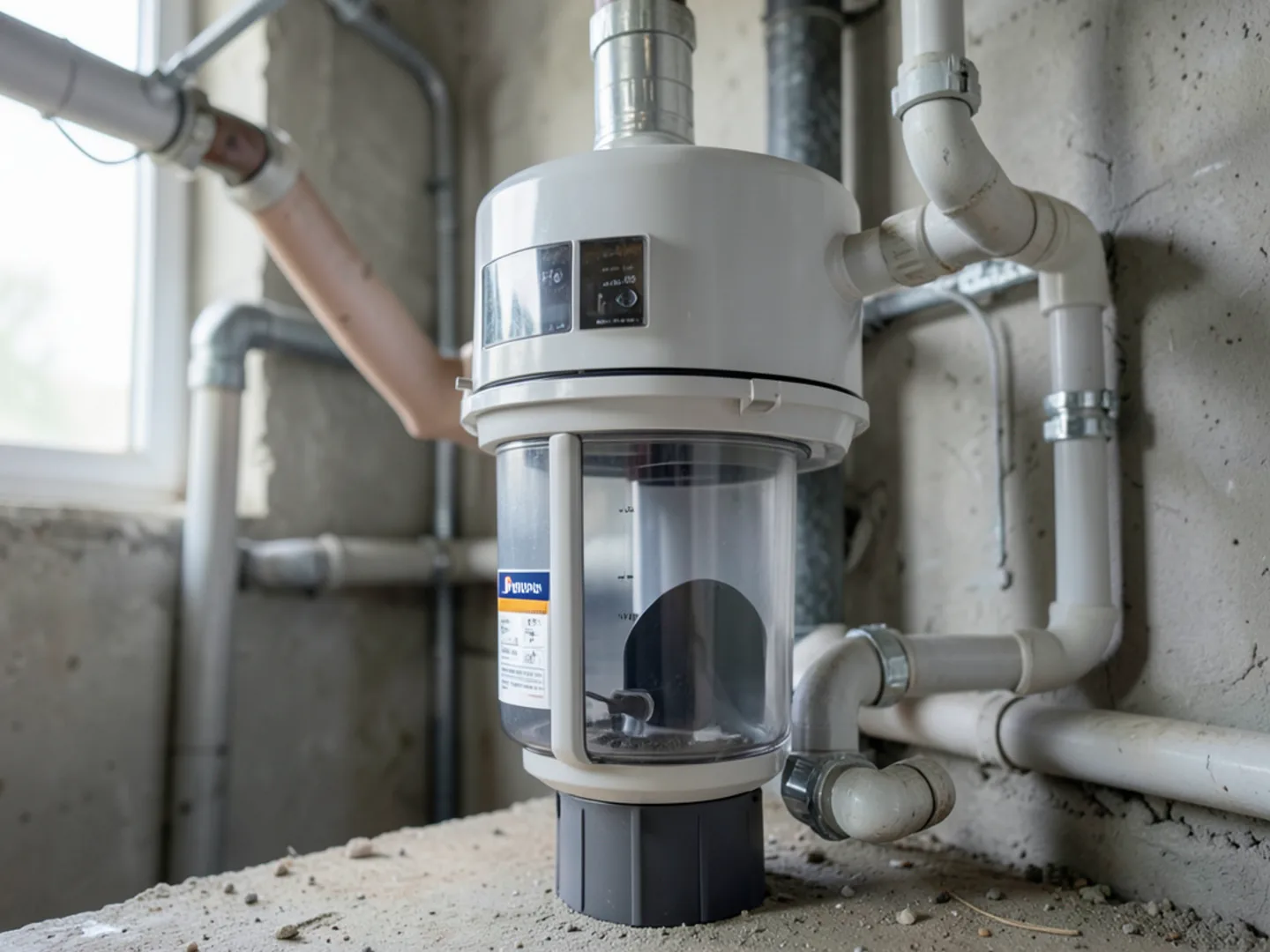
Impact on plumbing fixtures, appliances, and pipe lifespans
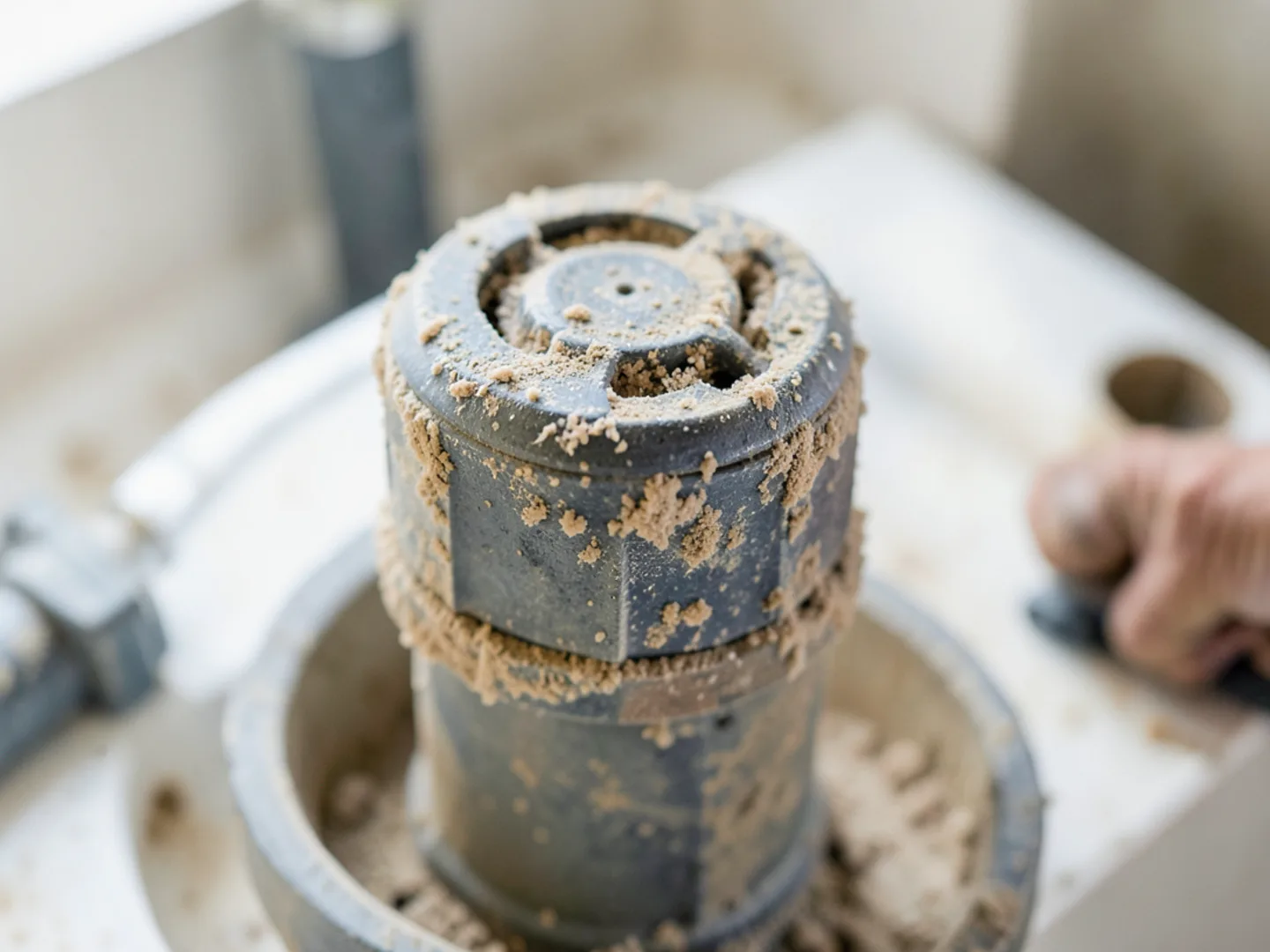
Beyond water heaters, hard water minerals degrade fixtures and appliances across every room of a Corona home:• Shower Valves and Cartridges: Pressure-balancing and thermostatic shower valves (such as Moen Posi-Temp or Kohler Rite-Temp) rely on internal brass and ceramic sliding spools. Calcium crystals deposit inside the cartridge tolerances, causing the handle to become stiff and unmovable, or jamming the pressure spool so the shower only delivers lukewarm water.• Aerators and Spray Heads: High concentrations of mineral scale collect on faucet aerator screens and showerhead nozzles. Water volume gradually decreases from a normal flow rate to a frustrating, scattered spray, requiring regular disassembly and acid descaling.• Dishwashers and Laundry Washing Machines: Mineral buildup coats internal heating elements, requiring extended wash cycles and higher electrical consumption. Dissolved calcium reacts with laundry detergents to form an insoluble curd that leaves white residue on clothing and causes glassware in dishwashers to develop permanent cloudy etching.• Toilet Flush Mechanisms: Calcium scale encrusts the flush valve seat, preventing the flexible rubber flapper from creating a watertight seal. This leads to continuous phantom flushing that wastes hundreds of gallons of water each week.• Under-Slab Copper Pipe Corrosion: While mineral scale forms a protective layer in some water chemistries, hard water in Corona contains high dissolved oxygen and chloramines. When scale deposits form irregular nodules along pipe interiors, it creates localized galvanic concentration cells beneath the nodules, accelerating pitting corrosion and causing under-slab pinhole leaks.
Comparison table: water softeners vs conditioners vs reverse osmosis
To address Corona hard water effectively, property owners must understand how different water treatment technologies perform. The following comparison table outlines the three primary treatment systems:• Salt-Based Ion-Exchange Softener: - Primary Function: 100% removal of dissolved calcium and magnesium ions. - Operating Technology: Negatively charged polymer resin beads exchange hardness ions for sodium or potassium ions during automated regeneration cycles. - Whole-House vs Point-of-Use: Whole-house installation on main incoming water supply loop. - Primary Benefit: Completely eliminates scale buildup in water heaters, piping, showerheads, and dishwashers. - Maintenance Demand: Adding replacement salt or potassium chloride bags to the brine tank every 6 to 8 weeks.• Template-Assisted Crystallization (TAC) Conditioner: - Primary Function: Physical scale prevention without removing minerals or using chemicals. - Operating Technology: Catalytic ceramic media transforms dissolved hardness ions into inert microscopic crystalline clusters that cannot stick to pipe walls. - Whole-House vs Point-of-Use: Whole-house installation on main incoming supply riser. - Primary Benefit: Zero electrical consumption, zero wastewater discharge, and 100% salt-free operation. - Maintenance Demand: Replacing the catalytic media canister every 3 to 5 years.• Multi-Stage Under-Sink Reverse Osmosis: - Primary Function: Comprehensive purification of drinking and cooking water. - Operating Technology: High-pressure semi-permeable membrane filtering down to 0.0001 microns, removing TDS, microplastics, lead, and chlorine. - Whole-House vs Point-of-Use: Point-of-use unit installed under the kitchen sink with a dedicated designer faucet. - Primary Benefit: Delivers bottled-quality water for coffee, drinking, and culinary preparation directly at the sink. - Maintenance Demand: Replacing pre-filters and post-carbon polishing filters every 6 to 12 months.
Step-by-step water heater descaling protocol for Corona homeowners
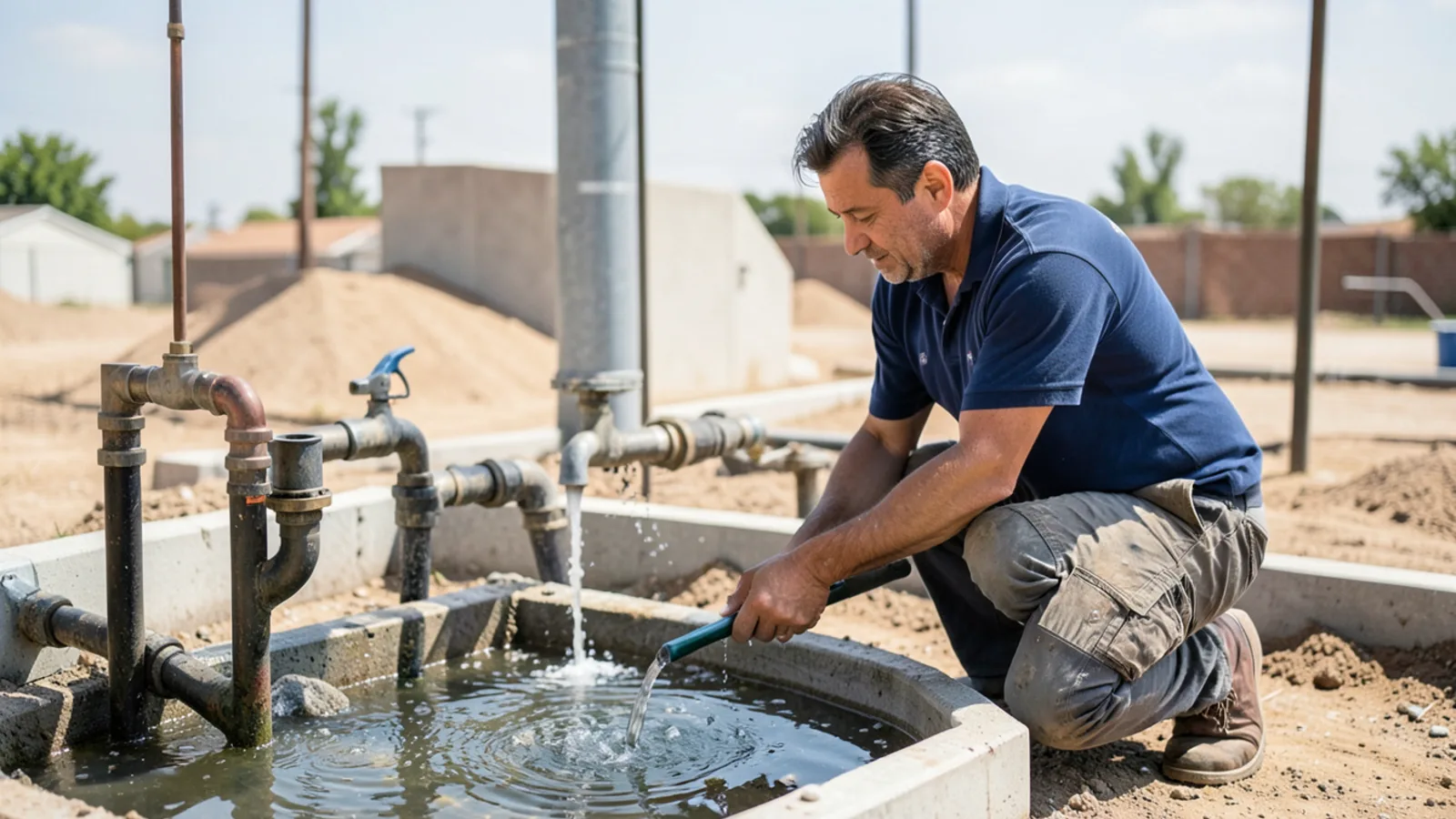
To prevent premature appliance failure, Corona homeowners should perform routine descaling maintenance on their domestic water heaters:For traditional storage tank water heaters, execute a preventative flush every six months: Turn off the electrical breaker or rotate the gas control dial to pilot. Connect a heavy-duty garden hose to the brass drain valve at the base of the tank, and route the opposite end to a driveway or exterior drain. Open the drain valve and let the water discharge under full municipal pressure for five minutes. The pressurized flow dislodges loose calcium flakes before they fuse into solid stone.For tankless water heaters, execute a thorough chemical descale every 12 months: Shut off the cold water inlet and hot water outlet isolation valves. Connect a submersible utility pump submerged in a five-gallon bucket filled with food-grade distilled white vinegar to the cold service port. Connect a discharge hose from the hot service port back into the bucket. Circulate the vinegar solution through the copper heat exchanger for forty-five to sixty minutes. The acetic acid dissolves calcium carbonate scale completely. Flush the unit with fresh municipal water for five minutes, clean the cold water inlet debris screen, and restore normal heating operation.
Regional environmental standards and green softening alternatives
When selecting a water treatment solution in the Inland Empire, homeowners must consider regional environmental regulations governing wastewater salinity. The Santa Ana Regional Water Quality Control Board and regional wastewater agencies closely monitor dissolved salts entering wastewater treatment facilities, as treated reclaimed water is recycled for local agricultural and landscape irrigation.Older, timer-based water softeners regenerated on preset calendar schedules regardless of whether water was used, discharging excessive brine into the sewer system. Modern ion-exchange softeners installed by our technicians utilize electronic metered digital control heads that monitor exact household gallon consumption. The system only regenerates when the resin capacity is truly exhausted, reducing salt usage and wastewater discharge by up to forty percent.For homeowners seeking completely green, salt-free options, catalytic template-assisted crystallization (TAC) conditioners offer full scale mitigation without adding sodium or producing any brine rinse water. Our certified plumbers evaluate your home water hardness, plumbing architecture, and family usage to recommend the optimal treatment configuration for your property. To schedule an in-home water hardness analysis or system installation, call (207) 419-2600.
Need professional diagnostics or repairs in Corona?
Our technicians are stationed at 685 E Grand Blvd in Corona. Learn more about our complete plumber in Corona CA capabilities, or call our direct phone line at (207) 419-2600.